
Gansu is not a place that shows itself all at once. It starts with dusty Silk Road towns, then shifts into Buddhist caves, rainbow cliffs, grasslands, desert lakes, and busy night markets. For travelers planning beyond the usual Gansu tours, these 15 best things to do in Gansu bring together history, wild scenery, and food with a strong northwest character.
Culture & History: Echoes of the Ancient Silk Road
1. Uncover Silk Road Treasures at Gansu Provincial Museum
For anyone wondering what to do in Gansu, the Gansu Provincial Museum is a smart start before visiting more hidden ancient Silk Road sites in China. Most visitors head straight for the famous “Galloping Horse Treading on a Flying Swallow”. This bronze sculpture has become a national symbol of Chinese tourism, and you’ll find that the details are interesting.
Besides, in other galleries, you’ll get the chance to see some old coins, painted pottery, silk fragments, camel figures, and trade relics that show how goods and ideas crossed deserts centuries ago. These are all valuable Gansu cultural heritage.
2. Wander Through the Jiayuguan Fort
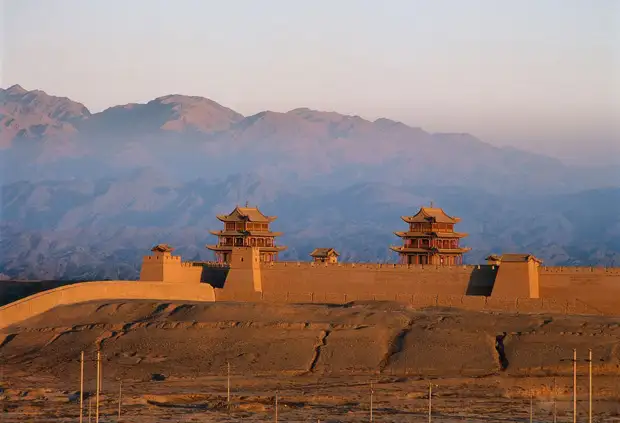
Among all historical sites in Gansu, the Jiayuguan Fort feels like a true military fortress. And don’t miss the Jiayuguan Great Wall on your tours in Gansu. It stands at the western end of the Ming Great Wall, right where the Hexi Corridor narrows between desert and mountains.
Merchants, soldiers, envoys, and caravans all passed through here before heading farther west. Walking through the complex, you’ll sense how important this frontier once was.
3. Discover the Ruins of Yumen Pass
Yumen Pass is one of the most famous Silk Road attractions in Gansu. Coming here, you’ll be attracted by its loneliness. The remaining square fortress, built from rammed earth, may look simple at first, but the empty land around it tells half the story.
Visiting there is among the best things to do in Gansu for a taste of the route’s wilderness and scale. The old line “the spring wind never crosses Yumen Pass” makes sense here, with empty land stretching far beyond the ruined walls.
>> 7-day essence of Gansu tour: Zhangye, Jiayuguan, Dunhuang
Gansu Buddhist Grottoes Art: The World's Treasured Canvas
4. Marvel at the Masterpieces of the Mogao Caves, Dunhuang
Being one of Dunhuang’s greatest treasures, the Mogao Caves are among the top Buddhist grottoes in China and one of the best places to visit in Gansu, so never miss it on your Hexi Corridor travel. Centuries of Buddhist art are presented on the walls, but the visit does not feel like a formal museum walk.
The faded colors, soft cave light, and small human details make the murals surprisingly close. Some caves are grand, while others are narrow and dim, so a guided visit helps you understand the Silk Road stories behind them.
5. Explore the Cliffside Maijishan Grottoes
Maijishan Grottoes are also one of the most famous Gansu tourist attractions. Unlike Mogao, Maijishan has the green mountains and forests as its background. The caves are cut into a steep, honey-colored cliff, with narrow walkways clinging to the rock face. The climb is part of the fun, though it may test anyone afraid of heights.
Inside the grottoes, the clay statues are the real treasure. Many have soft expressions, rounded faces, and peaceful gestures, which is why Maijishan is often called the “Oriental Sculpture Gallery.”

6. Admire the Riverside Bingling Temple Caves
Visiting the Bingling Temple Caves is a fun and unique thing to do in Gansu, as the journey begins on the water. This also makes it different from many Silk Road tours to Gansu.
The Buddhist grottoes are carved into red cliffs, and the best details appear after getting close to the rock face. Small cave niches hold weathered Buddha figures, bodhisattvas, and old murals, while the larger statues still carry a quiet strength despite centuries of wind and sun. The giant seated Buddha is a major highlight, rising against the cliff with a calm face, looking out over the water below.
>> 10-day classic Silk Road tour plus Buddhist grottoes exploration
Nature & Landscapes: The Wild Beauty of Gansu
7. Photograph the Colorful Zhangye Danxia Landform
Still unsure what to do in Gansu? Zhangye Danxia Landform is an ideal option if you are coming for mountains and canyons in Gansu.
It is easy to visit, as shuttle buses link several viewing platforms inside the park. More often than not, sunset is usually the best time for photos. After rain, the colors can look richer, but clear days still bring strong contrast. The main platforms are usually crowded, so moving a little slower often helps catch better angles and wider views across the Rainbow Mountains in China.
>> 6-day wonders tour of Badain Jaran Desert & Danxia Landform
8. Appreciate the Yellow River Scenery in Gansu
Enjoying the Yellow River views is one of the more surprising things to do in Gansu. You might think that the Yellow River is muddy, but at Liujiaxia Reservoir in Yongjing, it turns clear green. Boats and speedboats cut through the gorges, with red Danxia cliffs rising on both sides.
Back in Lanzhou, the Yellow River runs right through the city. Walk along the bank, and it is easy to spot old waterwheels, sheepskin rafts, and the Yellow River Iron Bridge linking both sides of the city.
9. Ride Horses Across the Sangke Grassland
Sangke Grassland is also a must-stop on your Gansu trip, and it actually slows down the whole pace. Outside Xiahe, the road opens into broad plateau meadows, where the air turns crisp, and the sky seems much closer. Horse riding here is usually easy and casual, so it works even for travelers without much riding experience.
Typically, summer brings greener grass and bright wildflowers. Visit there in the afternoon when it’s perfect for slow rides, photos, and a cup of yak milk tea nearby.
Desert Experiences: Oasis Wonders and Off-Road Thrills
10. Camel Riding at Crescent Lake & Singing Sand Dunes
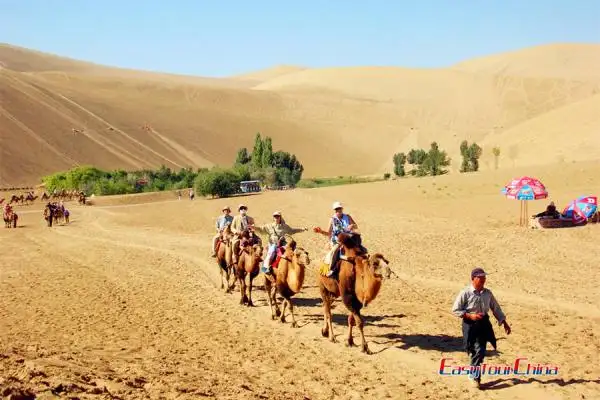
Crescent Lake and the Singing Sand Dunes are among the top attractions in Gansu. For first-time visitors, camel riding is one of the most accessible things to do in Gansu. It gives you an easy way into Gansu desert landscapes without a tough expedition.
The normal route is gentle and suitable for most visitors. If you want something more challenging, visit the higher dunes, which provide wider views over the oasis. Just note that late afternoon works best, since the sand cools down and the light turns soft. Also, stay for sunset, then watch this desert in China slowly lose its heat.
>> 3-day Dunhuang Gobi Desert walking tour
11. Go Off-Roading in the Badain Jaran Desert
Badain Jaran is worth visiting during your China tours to Gansu. The real experience begins after switching into a local 4WD, because the tracks soon disappear into huge sand hills and hidden lake basins. The ride can be bumpy and thrilling, especially when the vehicle climbs a steep dune and drops down the other side.
At sunset, the desert lakes go quiet, and the dunes sink into shadow, which adds a mysterious atmosphere to the desert. As you wish, you can camp by the water for stargazing, which is considered one of the best parts of your China Gobi Desert travel.
Temples & Monasteries: Spiritual Journeys Along the Route
12. Immerse in Tibetan Culture at Labrang Monastery
If you are interested in Tibetan Buddhist culture, then heading to Labrang Monastery in Xiahe should be included on your list of top things to do in Gansu. It’s among the top 10 temples in China. There, monks move between prayer halls, pilgrims walk the kora path, and the long line of prayer wheels keeps turning through the day.
The most memorable part is joining the circuit and slowly spinning what is often called the world’s longest prayer wheel corridor. The wooden wheels creak softly as people pass, and the whole walk settles into a calm rhythm after a while.
13. Visit the Zhangye Giant Buddha Temple
Zhangye Giant Buddha Temple is tranquil in a very old-fashioned way, and it is a good stop for slowing down between Zhangye Danxia and the longer Silk Road drive west. Inside the main hall lies China’s largest indoor reclining Buddha, made with a wooden frame and clay, huge but gentle rather than overwhelming.
The temple once had close ties with royal patronage, and that dignity still lingers in the courtyards. Adding this site to your Gansu itinerary, and you’ll feel that atmosphere in person.
>> 9-day Southwest Gansu Tibetan Buddhist culture tour
Food & Local Life: A Taste of the Authentic Northwest
14. Experience the Halal Food Culture in Gansu
Sampling halal food is one of the tastiest things to do in Gansu, and Lanzhou beef noodles are only the beginning. Most halal food in Gansu runs deep, shaped by Hui, Dongxiang, Bao’an, and Salar traditions.
Don’t hesitate to try the Gansu local food like hand-grabbed mutton, cold niangpi with sesame paste and chili oil, or sweet fermented oats after a heavy meal. Then sit by the Yellow River with a bowl of Eight Treasure Tea. That is Gansu at its most local.
15. Dive into the Night Markets in Gansu
Night markets bring Gansu’s Silk Road cities back to life after dark. In Lanzhou, Dunhuang, Zhangye, or Jiayuguan, stalls fill the streets with grilled lamb, cold noodles, sweet drinks, dried fruit, and the smell of cumin in the air. These local markets in Gansu are not just for snacks. Visiting these places, you can catch a glimpse of the local life in Gansu.