Table of Contents
- 1. Binggou Danxia
- 2. Yulin Grottoes
- 3. Wei-Jin Tombs/Art Gallery
- 4. Dahaidao in Hami, Xinjiang
- 5. Lop Nor Village
- 6. Sumeru Mountain Grottoes (Xumishan grottoes)
- 7. Heishui (Black Water) Kingdom Site
- 8. Xuanquanzhi Site
Travel along the ancient Silk Road with the off-the-beaten-track sights, and you will journey throughout history and back to over 1000 years ago - caravans came and went, and regions arrived in China with important relics.
Discover 8 hidden gems of China’s Silk Road, from the quiet caves of Yulin Grottoes to the remote beauty of Bingou Danxia. Explore unexplored Silk Road destinations, lesser-known villages, and forgotten Silk Road cities - promising rich history and authentic landscapes beyond the usual tourist trail.
Binggou Danxia
- Location: Kangle Township, Suzhan Yugur Autonomous County, Zhangye City, Gansu Province; about 45-50 kilometers away from Zhangye City.
- Type: World Geopark, Window-like Palace-style Danxia Landform
- How to get there: There are limited bus services to Bingguo Danxia; a much better option is private transfer.
- Best time to visit: May to October. Be aware of strong wind and high UV rays.
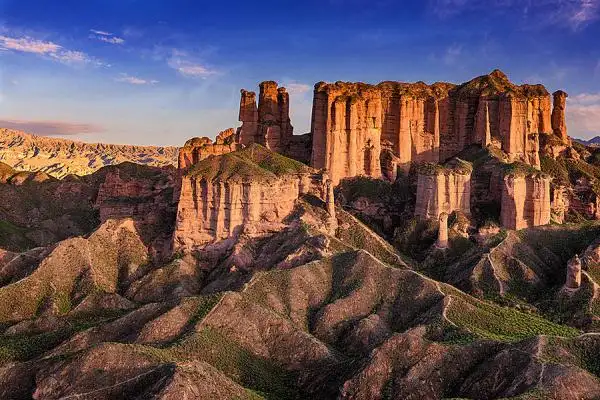
One of the highlights of the Silk Road is Zhangye's colorful Danxia landform, which resembles a series of rainbow mountains. While, Binggou Danxia stands out due to its imposing and rugged shape, and with much fewer tourists. The "Geography of China" magazine and the "National Geographic" magazine of the United States have rated it as one of the "7 most beautiful Danxia landforms in China" and one of the "10 most amazing geographical wonders in the world".
You will be overwhelmed by the typical "window lattice-like" and "palace-like" landforms, showcased in "The Louvre", "The Camel Welcoming Guests" and other figurative stones.
Our suggestion is that you visit Binggou Danxia in the morning, divided into the Xiaotian Scenic Area (requiring 1-1.5 hours) and the Daxitian Scenic Area (if time permits). Then, go to Zhangye's Rainbow Mountain in the afternoon.
>> Recommended 7 Days Essence of Gansu Tour: Zhangye Jiayuguan Dunhuang
Yulin Grottoes
- Location: About 70 kilometers south of Guazhou City, Jiuquan City, Gansu Province
- Type: Cave art, Silk Road Buddhist sites, World Cultural Heritage (part of the Dunhuang Caves, the "sister cave" of Mogao Caves)
- How to get there: No direct bus; Take a private transfer from Dunhuang, approximately 1.5 hours.
On both sides of the Yulin River Gorge, there are 43 existing caves in the Yulin Grottoes, with over 5,200 square meters of murals and more than 270 statues. They date back to the Tang, Five Dynasties, Song, Western Xia, Yuan, and Qing dynasties.
Although it is not as famous as the Mogao Caves, one of the top attractions along the China Silk Road, it has fewer tourists and better protection. Many visitors describe it as an "unexpected surprise" - especially because the murals from the Western Xia period are unique to the country.
Easy Tour China note: The hidden caves including Cave 25, and Caves 2, 3, and 4 are the highlights, but additional payment is required. Among them, Cave 25 is a must-see, and the "Western Pure Land Transformation" in its "Viewing the Infinite Life Sutra Transformation" is the peak of Dunhuang murals.
Wei-Jin Tombs/Art Gallery
- Location: On the sandy plain in Xinzhong Town, Jiayuguan City, Gansu Province; about 18 kilometers away from the city center of Jiayuguan.
- Type: Archaeological site, underground murals, ancient burial groups
- How to get there: No public transportation available; take a taxi or a private transfer from Jiayuguan City.
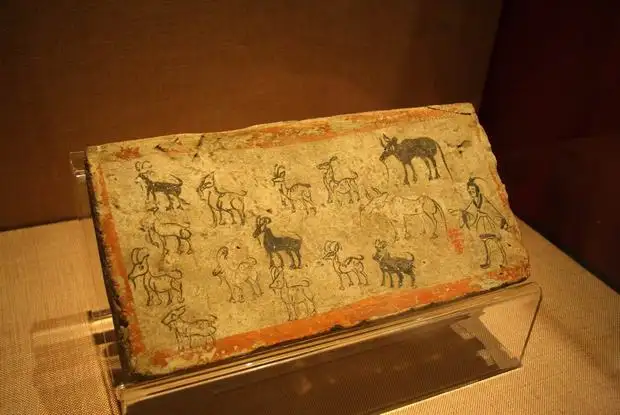
Renowned as "the world's largest underground gallery", the Wei-Jin Tombs is one of the hidden attractions in the Hexi Corridor along the Silk Road. Within an area of nearly 13 square kilometers, there are over 1,400 ancient tombs from the Wei-Jin period (220-420 AD). What makes these tombs particularly valuable is the well-preserved painted brick paintings on the walls of the burial chambers.
These "colorful pictures" depict various aspects of life in society 1600 years ago, such as farming, silkworm rearing, hunting, feasting, travel, and military drills. The "Postman Picture", a treasure of the tomb, recreates the ancient postal service scene and has thus become the iconic image of China's postal service.
Among these thousands of tombs, only the 6th tomb, a tomb for a couple buried together, is currently open to the public.
Easy Tour China note: The tombs are small, and some passages require bending over to pass through. Therefore, those with claustrophobia should proceed with caution.
>> Recommended 11 Days Amazing Silk Road Odyssey Tour from Xian
Dahaidao in Hami, Xinjiang
- Location: Within the Wubao Town, Yizhou District, Hami City, Xinjiang; about 70 kilometers away from the Hami city center; located at 42.50°N latitude, 93.80°E longitude
- Type: World-class Yardang Geological Park, legal unguided area crossing, China Silk Road heritage site
- How to get there: A road trip from the Hami city center; A private transfer escorted by a local guide and an experienced driver
- Best time to visit: March to mid-April, September to October; The surface temperature exceeds 60°C in summer
The Dahaidao Road was the nearest trade route along the ancient Silk Road from Dunhuang to Hami and Turpan, covering a distance of approximately 500 kilometers. It was the only uninhabited area in China that could be legally traversed. It used to be a perilous passage for merchants to circumvent the Tianshan Mountains. Today, this remote destination on the Silk Road has become a paradise for off-road enthusiasts.
Why? This is one of the most Mars-like surfaces on Earth, featuring spectacular Yadan formations. Discover "The Sea God Turtle" and "Alien Base". And the Eskechayel Castle (in Uyghur language meaning "old city") is the only site along the ancient Silk Road that can prove human activity. It has been carbon-14 dated to approximately 2,500 years ago during the Shang and Zhou dynasties.
Moreover, this is also the largest and most concentrated known site of pterosaur fossils in the world.
Easy Tour China note: A four-wheel drive off-road vehicle is mandatory. 90% of the area within the scenic spot has no mobile phone signal. You must download offline maps in advance or bring a GPS or satellite phone.
Lop Nor Village
- Location: Dunketan Township, Weili County, Ba Prefecture, Xinjiang; at the lower reaches of the Tarim River; on the northern edge of the Taklamakan Desert
- Type: Remote, unexplored village, desert oasis, poplar forest landscape
- How to get there: Take a bus from Korla to Weili and then hire a car; Alternatively, book a private car
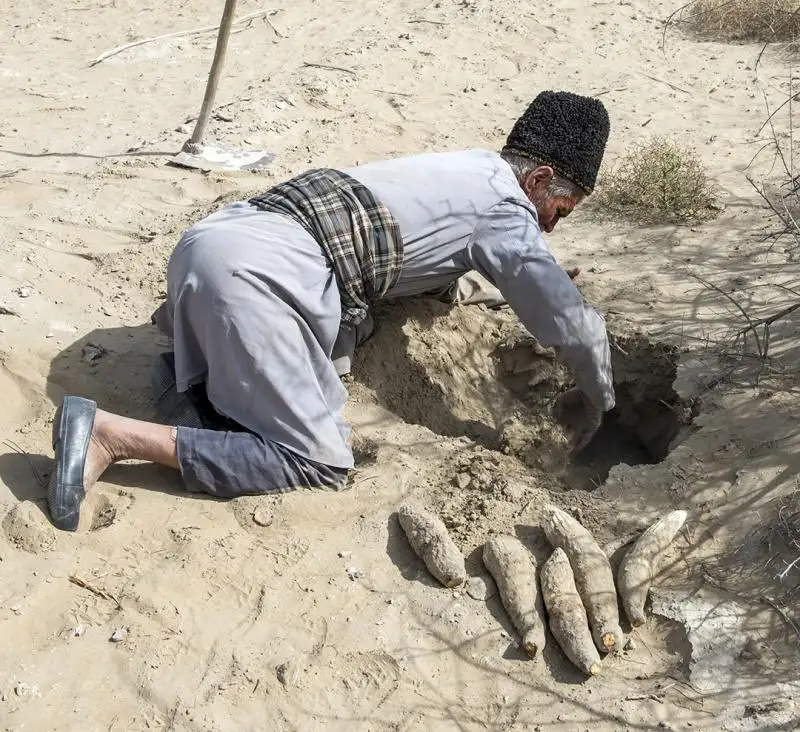
Have you heard of "The Last Fisherman in the Desert"? It's the Lop Nor people. And this village is their settlement. One of the oldest ethnic groups in Xinjiang, the Lop Nor people have been isolated from the outside world for thousands of years and have made a living by fishing along the Tarim River. They still retain their unique way of life, architecture and cultural customs.
And here there are unparalleled landscapes - the largest desert in China (Taklimakan Desert), the longest inland river in China (Tarim River) and the oldest poplar forest. Experience the unique Lop Nor culture, and go off-road in the desert, ride camels - enriching your Silk Road adventures.
Sumeru Mountain Grottoes (Xumishan grottoes)
- Location: Huangduo Fort Street, Sanying Town, Yuanguo City, Ningxia; about 55-60 kilometers away from Guyuan City
- Type: Important grottoes on the northern section of the Silk Road
- How to get there: Take a coach from the Yuanguo Bus Station to Sanying Town, then transfer to a private car to reach the scenic area.
The Xumishan grottoes, excavated during the Northern Wei Dynasty (386-534), were continuously constructed for nearly 500 years by the Western Wei, Northern Zhou, Sui, and Tang Dynasties. An important Buddhist heritage on the Silk Road, it witnessed the evolution of Buddhist grottoes in China and the integration of Chinese culture.
One of the best Buddhist grottoes in China, the lesser-known Sumeru Mountain Grottoes began the process of transitioning from clay sculptures to stone carvings in the grottoes.
The large Buddha hall in the 5th cave stands at a height of 20.6 meters, featuring a Maitreya Buddha seated statue - the largest stone carving in Ningxia. The 51st cave (located in Xiangguo Temple) is the largest cave on Sumeru Mountain, with exquisite carvings.
In addition, the uniqueness of Xumishan grottoes lies in its geological wonders - the eastern side of the mountain is a typical Danxia landform; while the western side is a layer of bluish-gray limestone.
Heishui (Black Water) Kingdom Site
- In Chinse: 黑水国遗址
- Location: Mingyong Town, Ganzhou District, Zhangye City, Gansu Province; about 12-15 kilometers northwest of Zhangye City
- Type: Archaeological site, abandoned ancient city ruins, ancient Silk Road post station
- How to get there: The only recommended way is to book a private transfer from a travel agency
The Heishui Kingdom Site has a history of over 4,000 years. Multiple ethnic groups such as the Mohe people, the Xiongnu, and the Han people lived and conducted trade here. It was once an important stopover on the Silk Road, and a witness to the historical changes of the Hexi Corridor.
Today, this forgotten city is partially covered by sand. However, it still retains the ruins of the Han and Tang dynasties, prehistoric sites, and ancient tombs. In the relatively well-preserved southern part of the city, you can see the rammed earth walls and the city gate. While the older northern part (the former site of Zhangye Prefecture during the Han Dynasty) is severely damaged, only the remnants of the Xiongnu-era walls and the dried-up crescent-shaped lake can be seen.
Easy Tour China note: This is an unexplored Silk Road site without ticket office, restroom, or shops.
>> Related reading: Fascinating Facts About the Silk Road
Xuanquanzhi Site
- In Chinse: 悬泉置遗址
- Location: At the junction of Dunhuang City and Guazhou County, Gansu Province; at the western end of the Hexi Corridor
- Type: Archaeological site, Han Dynasty post station site, World Cultural Heritage Site
- How to get there: From the downtown of Dunhuang, take the tourist shuttle bus (maybe available during peak seasons), take a taxi or hire a car to go there
Xuanquanzhi is the only Han Dynasty post station site discovered through archaeological research to date. It is also the largest and most intact post station site in China and even in the world.
It was established during the Western Han Dynasty (approximately 111-92 BC). As a post station for delivering mail and information, it was also a large-scale official reception venue on the Silk Road, where messengers, officials, government employees, and foreign guests passing through would be greeted.
The site covers approximately 22,500 square meters. The main structure is a 50×50-meter square fort, which includes accommodation areas, office areas, a tax collector's office, a medical office, stables, a road, and watchtowers.
35,000 Han Dynasty bamboo slips were unearthed here, documenting the daily events at the post station, such as receiving envoys from various Western Regions such as Wusun, Dayuan, Loulan, Khotan, and Kucha.
Easy Tour China note: Lower your expectations of this magnificent structure; it's just an earthen platform in the Gobi Desert. Drones are strictly prohibited.
Best China Silk Road Trip Itineraries:
- 10-day Classic Silk Road Tour plus Buddhist Grottoes Exploration
- 15-day China Silk Road In-depth Discovery
- 20-day China Silk Road Train Tour from Beijing