Taklamakan Desert Travel Guide: Xinjiang's Sea of Death
Travel in Kashgar
Private Xinjiang Tours including Kashgar
Hot China City Tours
Table of Contents
- 1. Taklamakan Desert Facts
- 2. Taklamakan Desert Overview
- 3. Why Visit the Taklamakan Desert
- 4. Top Things to Do in Taklamakan Desert
- 5. Taklamakan Desert Itinerary
- 6. Taklamakan Desert Weather & Best Time to Visit
- 7. How to Get to the Taklamakan Desert
- 8. Travel Tips for the Taklamakan Desert
The Taklamakan Desert is one of the most dramatic places in western China. It runs across Xinjiang with long highways, rolling dunes, and towns built around water. It was once part of the Silk Road, so history is never far away. Many travelers come for the desert road, sunrise views, and starry nights. It looks severe at first, yet the trip is easier and more rewarding than many expect.
Taklamakan Desert Facts
Taklamakan Desert Overview
As one of the top deserts in China, the Taklamakan Desert is also one of the biggest on Earth and the world’s second-largest shifting-sand desert. It stretches about 1,000 km east to west, with some dunes rising over 100 meters. Old Uyghur legends still surround the Taklamakan, and during your Xinjiang desert tour, the mystery of this place starts to feel more real.
Where Is the Taklamakan Desert Located
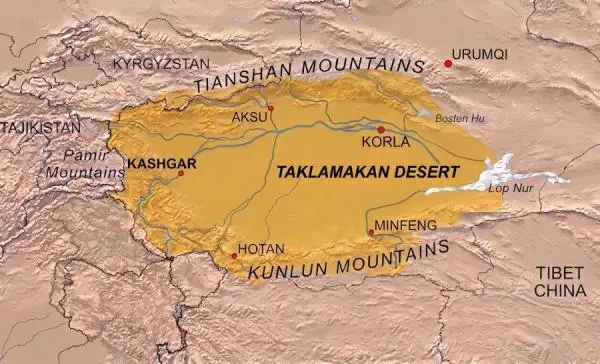
If you look at a Taklamakan Desert map, you will see it sits in the center of the Tarim Basin in southern Xinjiang, spreading across parts of Korla, Aksu, Hotan, and Kashgar. Many travelers reach this region through the Hexi Corridor to Xinjiang route, or combine it with a broader China Silk Road tour. Towns become farther apart, roads run longer, and the desert starts to dominate everything around it.
Why Is the Taklamakan Desert Nicknamed the Sea of Death
The Taklamakan Desert earned the name Sea of Death through centuries of hard reality. It is vast enough to confuse direction, and shifting dunes could swallow tracks overnight. Also, water has always been scarce here. That is why traders once kept close to oasis towns like Kashgar and Hotan instead of crossing the center. Tales of lost routes, buried ruins, and journeys gone wrong kept the nickname alive.
Why Visit the Taklamakan Desert
Epic Desert Scenery
The Taklamakan Desert features some of the most spectacular desert sand dunes in China and off-the-beaten-track sights along the ancient Silk Road. Long stretches of dunes roll across the desert, and wind keeps shifting them into strange new shapes, while mirages sometimes appear in the distance.
Desert Oasis Landscapes
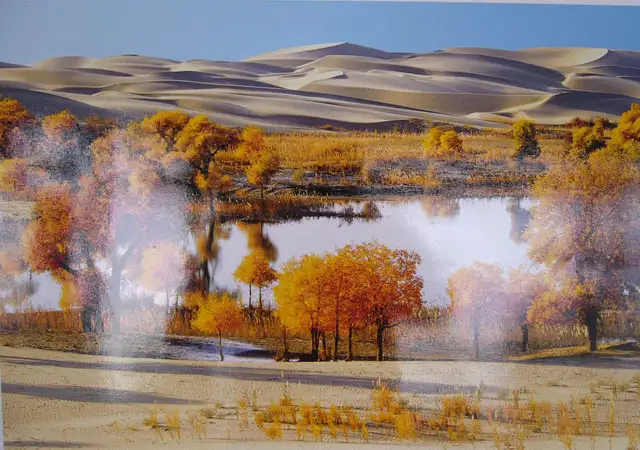
This desert has an incredible setting for a unique hiking adventure in China. Along the Hotan River, a green corridor cuts through the dry emptiness. As you see the populus euphratica forest and tamarisk shrubs break up the sand, the striking desert oasis landscapes will soon draw you in.
Silk Road Heritage
For a China cultural tour along the Silk Road, the Taklamakan Desert is essential, concealing sand-swallowed ruins like Loulan, Niya, and Dandan Oilik. While the desert in Dunhuang offers beautifully preserved Silk Road art, the Taklamakan provides a wilder, more mysterious sense of history.
>> Keep reading: Top 15 Fascinating Facts About the Silk Road
Desert Sunrise and Sunset Photography
Since it’s a great destination in China for photographers, capturing photos is also a big part of your Xinjiang tours to the Taklamakan Desert. Low light changes the dunes fast, and shadows carve clean lines across the sand, which makes it effortless to snap a masterpiece.
Top Things to Do in Taklamakan Desert
Cross the Legendary Taklamakan Desert Highway
Driving the Taklamakan Desert highway is a standout desert adventure in China, with long, empty roads running through the Sea of Death. Many travelers stop at the 0 km marker, and the 108 well houses built to maintain the route. In selected areas, confident drivers can also try an off-road desert safari in China beyond the main road.
Try Sand Sports and Camel Trekking
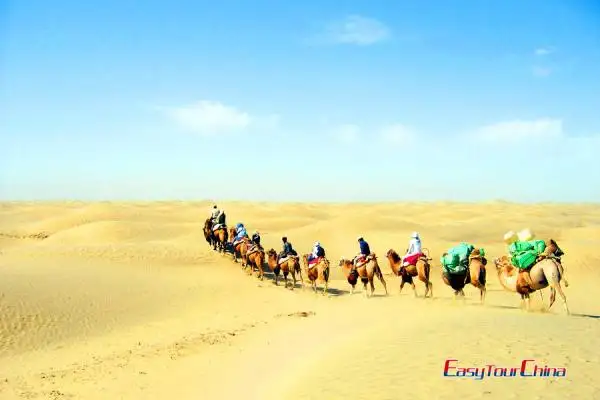
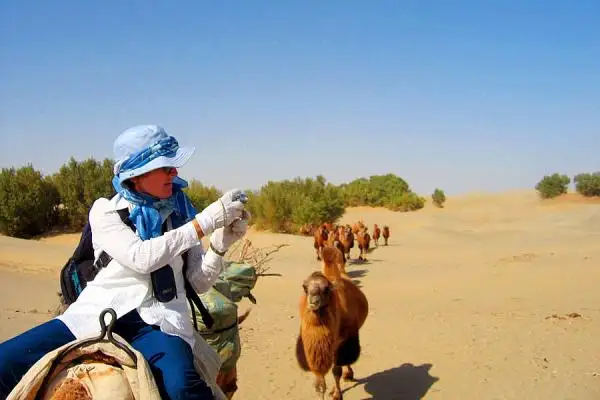
Like many desert tours in China, the Taklamakan provides more than just wide views. Here, you can slide down dunes, climb sandy ridges, or walk out at sunset when the heat drops. For a slower rhythm, camel trekking in the Taklamakan Desert areas is hard to beat. The swaying steps take time to get used to, then the ride turns calm and oddly relaxing.
>> 8-day Xinjiang desert exploration by camel ride
Stargazing and a Desert Camping Experience
In some areas, such as the N39 Desert Scenic Area in Makit, nights become part of the trip. A desert camping experience here often means tents on open sand, cooler air after sunset, and long, quiet hours outside. Stargazing in Taklamakan Desert conditions can be excellent on clear nights, with wide skies and very little distraction.
Explore Silk Road Ruins Swallowed by the Desert
A Silk Road desert expedition can also lead to sites such as Niya Ruins, where traces of daily life survived beneath the sand. While other legendary ruins remain harder to reach, parts of the Taklamakan Desert still connect with routes once studied by explorer Sven Hedin. So, the trip carries an older spirit of discovery for anyone looking to plan a Silk Road tour.
Visit Oasis Towns and Experience Uyghur Culture
The edge of the desert often brings the most human side of the journey. During your oasis exploration in Xinjiang, you can find how life once depended on water and fishing at stops such as the Lop Nur People Village, or Darya Boyi, a 400-year-old hidden village tucked deep within the dunes.
For a real Uyghur culture experience, sit down for red willow kebabs fresh off the fire, then stay a little longer when Muqam music starts in the evening.
>> 12-day Xinjiang desert discovery tour
Taklamakan Desert Itinerary
Most travelers spend around 2 to 3 days enjoying the Taklamakan Desert tour properly without rushing. Here is a classic 3-day route that gives a strong first impression of the desert, taking in poplar forests, long highway views, and oasis culture.
3-Day Taklamakan Desert Classic Itinerary
If you have 5 to 7 days, continue from Minfeng or Hotan and go deeper into the oasis belt to see the local side of the desert. You can drop by the Jiamailu jade night market or venture into Darya Boyi or Kashgar Old Town. With more days, you can head north toward the Tianshan Mountains and Heavenly Lake or marvel at Sayram Lake.
>> 7-day Hotan Taklamakan Desert hiking tour
Taklamakan Desert Weather & Best Time to Visit
The Taklamakan Desert in China has a severe desert climate, and temperatures fluctuate wildly throughout the year. Summer days can easily top 40°C, while the sand surface gets far hotter. Winter often drops below -20°C in colder spells. Days can be warm, yet nights turn cold fast. Rain is scarce, and the air stays extremely dry most of the time.
Hence, autumn in China is the best time for visiting the Taklamakan Desert, especially mid-October to early November. Days stay comfortable, nights are cool, and golden poplar forests brighten the desert edge. Spring is a possible alternative, with softer temperatures and occasional wildflowers, though frequent sandstorms often reduce visibility.
How to Get to the Taklamakan Desert
1. By Air
If you travel from major tourist cities in China like Beijing, Shanghai, or Xi’an, you can fly to Korla, Aksu, or Kashgar first. Then, head to the desert by rental car, with a local driver, or by transfer service.
2. By Train
Long-distance trains connect Silk Road cities like Lanzhou, Urumqi, and Turpan with Korla, Kashgar, and Hotan. After arrival, continue by road.
3. By Driving
Renting a car to drive gives you more freedom in the Taklamakan Desert. From the gateway cities, it is easy to reach routes like the Tazhong Highway and Minfeng Road.
Travel Tips for the Taklamakan Desert
1. Spend a night at a desert camp near Tazhong or Hotan if starry skies are appealing to you. For an easier stay near the Taklamakan Desert, hotels in Kuqa or Hotan are a better pick, with hot showers, proper beds, and a good place to rest after hours on the road.
2. Give the weather a final check before you set off, and skip days with heavy wind.
3. Inside the desert, places to eat can be few and far between, so bring extra water, some fruit, and easy snacks for the trip.
4. Xinjiang is shaped by many cultures, so being polite and observing local customs will greatly enhance your Taklamakan Desert travel experience.
5. If the plan is to go deeper into the desert, go with an experienced local guide and a proper 4x4 vehicle built for the terrain.
Explore the Taklamakan Desert with ETC
A Xinjiang desert trip will be much smoother with the right support. You can travel with Easy Tour China, a professional team with years of hands-on experience across China. Below are some popular China Silk Road tours that include the Taklamakan Desert.
Looking for a customized Xinjiang desert travel to Taklamakan? Contact us now. And we'll craft the itinerary according to your preferences and schedule.