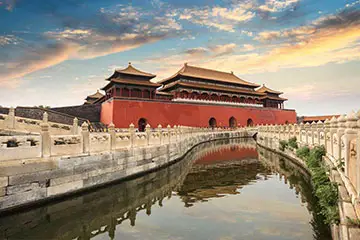
A journey into China's Buddhist grottoes is the perfect immersion for travelers who seek deep cultural understanding and serene inspiration.
From the majestic Mogao Caves in Dunhuang to the serene Longmen Grottoes in Luoyang, we’ve curated many of China’s most unusual Buddhist caves in this article to introduces you how Buddhism transformed through China’s ancient art and philosophy from the west frontiers to east middle land. With the most insightful explanation, each site reveals the matchless fusion of Buddhist faith and Chinese artistic genius, complemented by harmonious storytelling.
What Are Buddhist Gottoes? The Living Legacy of Buddhist Art More Than Just Stone
There are many types of Buddhist buildings. The cave is one of the oldest forms. In India, it is called a cave temple. The cave was originally the residence of Buddhist monks. Generally, a cave temple is carved into a long rectangle shape, with doors and windows at the entrance. In the middle of the cave is the place where monks gather, and on both sides are houses. Later, it developed into two forms: one is called a worship cave, and the other is called a meditation cave. The worship cave is carved with Buddha statues for people to admire and worship; the meditation cave is mainly for bhikkhus to practice meditation and live in.
From the 4th century to the 8th century, the architectural art of Indian Buddhism spread eastward to China along the ancient Silk Road. Ancient Buddhist grottoes that still exist in northwest China, such as Kuqa in Xinjiang, Dunhuang in Gansu, Yunlong in Shanxi, Longmen in Henan, and Xiangtangshan mountains in Hebei, were among the first to incorporate Indian cave art styles.
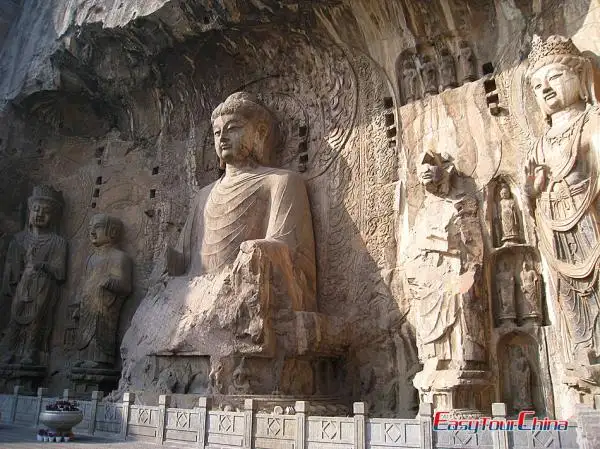
The identification of Buddhist cave carvings from different periods in China mainly involves observing the features such as the face shape, patterns, and clothing of the Buddha statues. These characteristics of each period's works fully demonstrate the ancient cultural exchanges and the integration of Buddhist art with Chinese culture.
Most of the major existing grottoes in China date from the Wei-Jin period to the Tang Dynasty or the early Song Dynasty. They preserve the essence of Gandhara art from India, and blend the traditional techniques and aesthetic tastes of Chinese painting and sculpture.The Dawn of Buddhist Rock-Cut Art in China: Tracing the Silk Road Origins (3rd - 4th Century)
The Silk Road set off from Luoyang or Chang'an (today’s Xi’an), the ancient capitals of China. It crossed the Wushaoling Pass, the Hexi Corridor, passed over the Tianshan Mountains and the Gobi Desert, and finally reached the South Asian continent and the Arabian Peninsula, and extended to the Black Sea and the Mediterranean Sea. This ancient trade route not only connected the trade between the East and the West, but also served as a cultural and artistic bridge for Buddhism to spread from India to the Central Plains of China.
Around the time of the Western and Eastern Han Dynasties (3rd century AD), Buddhism was introduced to the Central Plains via the Western Regions. The oldest existing Buddhist grotto in China is likely the Sanxian Cave in Kashgar, Xinjiang.
>> Related reading: Ten Most Famous Temples & Monasteries in ChinaKizil Caves in Kucha, Xinjiang
Kucha (present-day Kuqa) was one of the important city-states in the ancient Western Regions of China and the earliest region in China to come into contact with Buddhism. Built around the 3rd century AD, the Buddhist grottoes in Kucha are the westernmost large-scale grotto complex in China. Initially, Buddhism was formless; with its development in the Gandhara region, statues and murals gradually emerged, giving concrete forms to Shakyamuni and figures in Buddhist scriptures. These visible religious contents were brought to Xinjiang.
The Kizil Grottoes are the largest, with the earliest carving time and the largest area of preserved murals, among all the Grottoes of Kuqa. Currently, there are a total of 349 grottoes and nearly 4,000 square meters of murals remaining in the Kizil Grottoes.

The early grottoes (approximately 3rd - 5th centuries) featured simple decorations and primitive Buddhist themes. The middle period (6th - 7th centuries) saw the peak of grotto art, with exquisite mural techniques and rich content, showcasing a strong local style and the integration of Foreign influences. In the late period (8th - 9th centuries), due to the decline of Buddhism's status, the grotto art began to show a trend of simplification.
The mural art of the Kizil Grottoes integrates the artistic styles of India, Central Asia and the Central Plains. It also innovatively developed a unique local "Kuchastyle". Over time, the Kizil Grottoes gradually evolved from the original Indian-style stupas to tower-shaped structures with distinct local characteristics.
>> Recommended 15 Days China Silk Road In-depth Discovery TourHexi Corridor - The Crucible of Cultural Fusion (4th - 5th Century)
During the Wei, Jin, and Northern and Southern Dynasties (220-589), the practice of carving Buddhist grotto temples in the ancient Kucha region gradually spread eastward. The Hexi Corridor and Longdong region were important transportation routes connecting the Western Regions and Chang'an, and also major pathways for the eastward transmission of Buddhism.
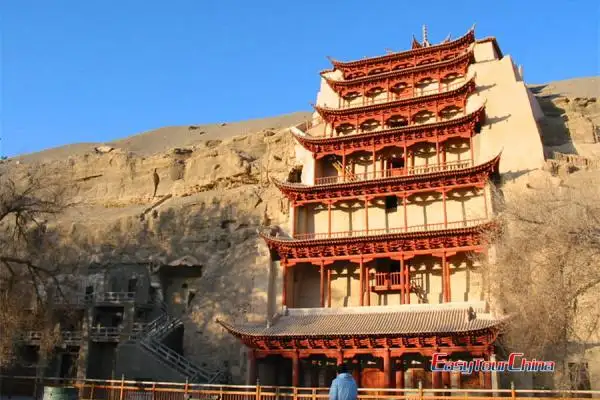
Gansu Province, with the largest number of grottoes in the country, is known as the "Hometown of Buddhist Grottoes." Gansu's earliest grotto temples of the Han Dynasty were formed during this period, including the Mogao Grottoes in Dunhuang, the Tiantishan Grottoes in Wuwei, the Bingling Temple Grottoes in Yongjing, and the Maijishan Grottoes in Tianshui.
Dunhuang Mogao Caves– A Millennium-Long Canvas
The Mogao Caves, also known as the Thousand Buddha Caves, were first built in 366 AD. Over the course of more than ten dynasties, they were continuously expanded and developed, becoming the largest and most well-preserved Buddhist art treasure house in the world. The total length from north to south is approximately 1.6 kilometers. There are currently 735 caves and 45,000 square meters of murals, as well as 2,415 statues.
Its murals feature both the style of the Kizil Grottoes, such as the diffusion technique and the costumes from the Western Regions, as well as the later Hanfu style of slender and elegant figures with elaborate clothing and wide belts. These clearly document the process of Buddhist art transforming from the characteristics of the Western Regions to those of the Central Plains.
>> Recommended 4 Days Dunhuang Discovery Tour
Tianshui Maijishan Grottoes - The "Sculpture Gallery"
The Maijishan Grottoes are regarded by some scholars as the earliest royal grottoes in China. However, in later periods, they were mainly funded by local officials, monks, and common people. As they were carved on the cliffs, the stairways soared through the air to connect various caves, resembling a Buddhist paradise on a sheer cliff.
The Maijishan Grottoes achieved a breakthrough in the "clay sculpture". The Buddha statues here broke away from the "foreignness" of the Gandhara style and presented gentle and soft forms of Central Plains people, marking a "localization" transformation in artistic style.
>> Recommended 10 Days Classic Silk Road Tour plus Buddhist Grottoes ExplorationNorthern Dynasties: The Heyday & "Sinicization" of Buddhist Grotto Statues (5th - 7th Century)
In the early 5th century, the Northern Wei Dynasty conquered the Northern Liang Dynasty and unified the northern regions of the Central Plains. Buddhism was introduced from the Hexi Corridor to the capital city Pingliang (Datong). At the end of the 5th century, Emperor Xiaowen of the Northern Wei Dynasty moved the capital to Luoyang. In the early 6th century, the ruling center of the Northern Dynasties shifted to Ye City and Chang'an.
The central government's ruling centers in the areas of Hebei and Henan became the cradle of Chinese grotto art.
The masterpieces of China’s Buddhist grottoes during this period include: Yungang Grottoes in Datong, Longmen Grottoes in Luoyang, Xiangtangshan Grottoes in Handan, Tianlongshan Grottoes in Taiyuan, Dafosi Temple in Bin County, and Xumi Mountain Grottoes in Guoyuan.
Datong Yungang Grottoes - The First Imperial Project
The Yungang Grottoes showcase the "Chinese style" of state intervention. They are of grand scale and rapidly became Chinese in nature. Moreover, various aspects such as the cave structure, the subject matter of the statues, the style of clothing, and the carving techniques were all transformed to incorporate the art of grottoes from Central Asia, India, and the Hexi Corridor.
As an example, the "Tan Yao's Five Caves" (Cave 16-20) within the Yungang Grottoes still retain a strong Gandhara and Indian style, but the tradition of combining the Buddha statues with the emperor statues fully demonstrates the monarchic ideology of "the emperor being the Buddha". In the mid-period grottoes (Cave 1-13), a double-cave layout emerged, symbolizing the joint governance of Emperor Xiaowen and Empress Feng. The Buddha statues began to combine the aesthetic preferences of Han Chinese scholars, featuring elegant clothing and slender, graceful figures.
>> Recommended 3 Days Datong Buddhist Tour with Yungang Grottoes
Luoyang Longmen Grottoes - The Completion of Sinicization
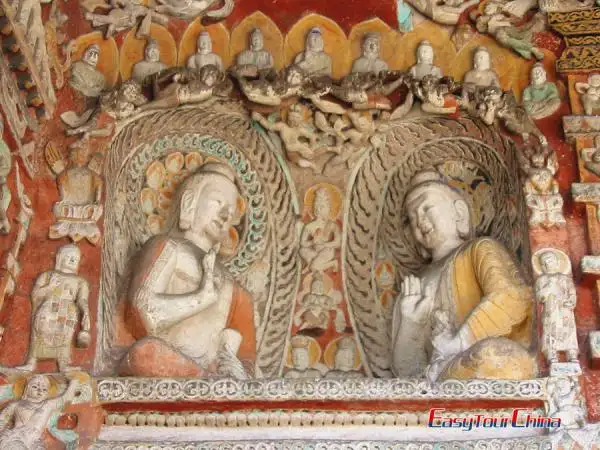
The Longmen Grottoes were first excavated after the Northern Wei Dynasty moved its capital to Luoyang (in 493 AD). There are currently 2,345 grottoes and over 110,000 statues, as well as more than 2,800 inscriptions and records. The Longmen Grottoes have been recognized by UNESCO as "the pinnacle of Chinese stone carving art".
Guyao Cave is the earliest grotto in the Longmen Grottoes. The statues and inscriptions inside are of exquisite calligraphy, representing a representative work of the Wei-style calligraphy. Bin Yang Middle Cave was built by Emperor Wen Wu of the Northern Wei Dynasty to pray for blessings for his parents, Emperor Xiaowen and Empress Wenzhao. The Buddha statues are dressed in the headdress and wide-sleeved robe style, which completely broke away from the influence of the Western Regions style and laid the foundation for the ancient Chinese aesthetic standards.
The Tang Dynasty was the peak period of the excavation of the Longmen Grottoes. Lushena Buddha stands out because of it the superb carving skills of the Tang Dynasty. The image of Luoshen Buddha is believed to be modeled after Empress Wu Zetian, perfectly combining the femininity of a woman with the solemnity of a Buddha.>> Recommended 3 Days Luoyang Tour with Longmen Grottoes & Shaolin TempleSouthward Expansion: Southern China's Cliffside & Cave Traditions
As the economic center of China began to shift southward, the craze for carving Buddhist statues in the northern regions of the Central Plains suffered a severe blow. Temples gradually replaced the functions of the grottoes.
The economy and culture in the south became increasingly prosperous. Monarchs showed great faith in Buddhism. During the Song, Liao, Western Xia, Jin, and Yuan dynasties, the peak period of carving Buddhist grottoes occurred in Sichuan, Chongqing, Zhejiang, and Yunnan.
Sichuan - The "Land of Buddha" (6th - 8th Century)
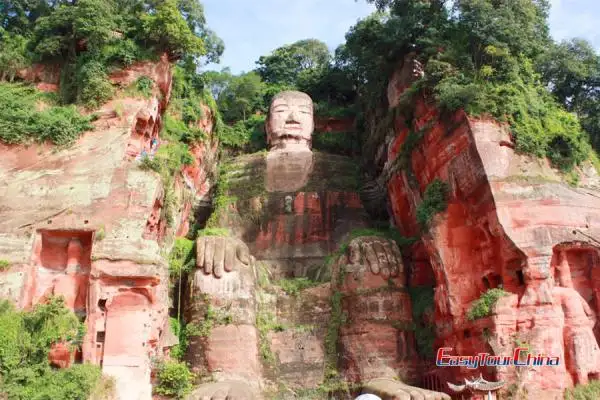
Sichuan (including Chongqing) boasts the densest collection of Buddhist grottoes in China, featuring images of Amitabha Buddha, seated Maitreya, Bodhi, Avalokiteshvara, the Western Pure Land Transformation, and the Heavenly Dragon and Eightfold Armies. The Thousand Buddha Caves in Guangyuan, the Baizhong Grottoes, the Leshan Giant Buddha, and the Dazu Rock Carvings are the best representatives.
With a Chongqing tour to Dazu Rock Carvings (beginning in the early Tang Dynasty and flourishing during the Song Dynasty), you will discover that Buddhism has fully integrated into the daily life of the people - with secular and story-like themes. Moreover, as the culmination of the convergence of Confucianism, Buddhism, and Taoism, Dazu Rock Carvings also witnessed the integration of Buddhism with Chinese native religions/philosophies.
>> Recommended 7-day Chongqing Chengdu Tour
Jiangnan - Literati Spirit (5th - 4th Century)
The Buddha statues incorporate the artistic tastes of the scholars from the Jiangnan region (South of the Yangtze River) and complement the landscapes or Chinese gardens. Examples include the stone caves in Qixia Mountain in Nanjing, Jiangsu, the Buddha statue in Xinchang, Zhejiang, the stone caves in the West Lake in Hangzhou, and the Feilai Peak in Lingyin Temple.
>> Recommended 2-day Hangzhou culture tourYunnan - Ethnic Integration (9th - 11th Century)
In the western and central regions of Yunnan Province, there are the main cave relics of Yunnan. The Shizhong Mountain Caves in Jianchuan County, Dali Bai Autonomous Prefecture, and the Fahuashi Caves in Anning City, Kunming, are the best examples. Plan a Yunnan tour to Shizhongshan Grottoes, which are treasures of Buddhist art during the Nanzhao and Dali Kingdom periods and known as "the Dunhuang of the southwest". Explore the integration of Buddhism and local ethnic cultures in the southwestern border areas.
The Tibetan Plateau: Buddhist Art at the Roof of the World (10th - 16th Century)
Tibet was an important area for the construction of Buddhist stone caves in ancient China. In the 7th century, Nepalese artisans carved the earlies caves. Around the 11th century, they mainly imitated the style of the surrounding areas, with relatively rough craftsmanship. From the 13th to 14th centuries, the style gradually became more mature, and from the 15th to 16th centuries, it reached its peak, with exquisite and magnificent works.The rock carvings at Chakpori Hill in Lhasa and the Dongga Piyang Grottoes in Ali are the best examples.
Ngari - The "Kingdom of Guge" & Buddhist Renaissance
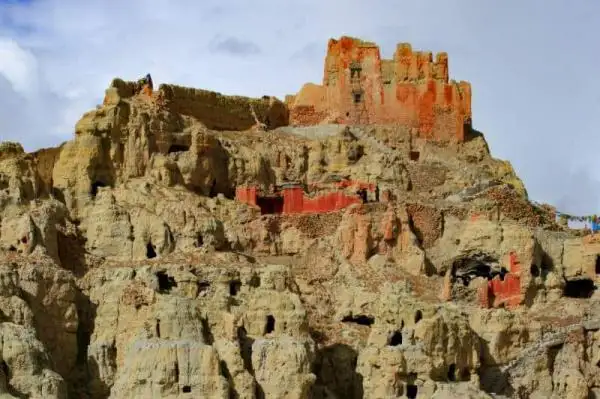
A Tibet tour to Ngari Prefecture takes you to the ancient land of the Guge Kingdom and the birthplace of the later propagation of Tibetan Buddhism. Little known but absolutely worthwhile for Buddhist culture enthusiasts, the Dongga Piyang Grottoes are the largest existing Buddhist cave complex in Tibet, including monasteries, castles, caves, and stupas. Its murals are the essence of the caves, blending Kashmiri, Indian, Nepalese, and Han Chinese elements, showcasing the diversity of Tibetan Buddhist art.
An Analysis of the Deep Layers of Cultural Fusion of the Buddhist Grottoes in China
Buddhism, including Buddhist cave art, was introduced to China from ancient India via the Silk Road and the Western Regions over two thousand years ago. It initially adopted the form of Indian Buddhist statues, and during its development, it integrated the cultures, thoughts, and aesthetics of various ethnic groups in China, forming a unique Buddhist art treasure with Chinese characteristics.Chinese Stone Carving Tradition & Sculptural Art: In the early days of Xinjiang, the grottoes were mostly constructed using clay sculptures and murals. However, when they reached the Central Plains region, Yungang and Longmen extensively employed stone carvings - a long-standing tradition of stone carving in northern China. Moreover, the features of the Buddha statues kept changing, evolving from the exotic features in the early period to the familiar East Asian features among the Chinese. The clothing patterns also shifted from the thick folds of the Gandhara style to the "exaggerated clothes and wide belts" style of the Southern Dynasties scholars.
Stone Inscriptions as spiritual texts in the Buddhist grottoes and blending with literature & poetry: In Chinese grottoes, you can find many vow inscriptions and biographies of the statues, which are themselves precious literary works. For instance, the "Stele of the Yichu Buddha Shrine" in the Longmen Grottoes, written by the Tang Dynasty calligrapher Chu Suiliang, is a masterpiece that combines both calligraphy art and Buddhist art. Moreover, after visiting the grottoes, scholars and poets of various dynasties left behind a large number of poems and inscriptions, which constitute a unique aesthetic tradition of Chinese culture.Explore Authentic with ETC’s Best China Buddhist Tours
Or simply contact us to get a custom trip.