
In the past 40 years, China witnessed a dramatic change in all fields. The economic prosperity brought by the industrialization and globalization has played an unprecedented impact on the Chinese diet, offering a large variety of food options in this country. Vegetarian food enjoys higher popularity nowadays and then several vegetarian cuisine types form. Some better-off Chinese people trace the value and ideal lifestyle from the traditions and become vegetarians. While on the other hand, younger generations influenced by the Western perspectives adopt vegetarian diets to lead a healthy life or purify their souls by not harming animals and environment.
As a matter of fact, Chinese vegetarian culture has a long history, which is so deep-rooted and colorful in terms of dish varieties, types of materials and cooking styles. For all Chinese people born in a country with the longest agricultural civilization, the preference for plant-based food is apparently rooted in almost everyone's soul and instinct. Just as Confucius said, “Eating coarse grains and vegetables, drinking plain water, bending the arm as a pillow to sleep on, the real fun lies in this way of life”. In another prominent history classic “Zuo Zhuan”, it was mentioned “Meat eaters are vulgar, and near sighted”, referring to those nobles and people from an upper social status.
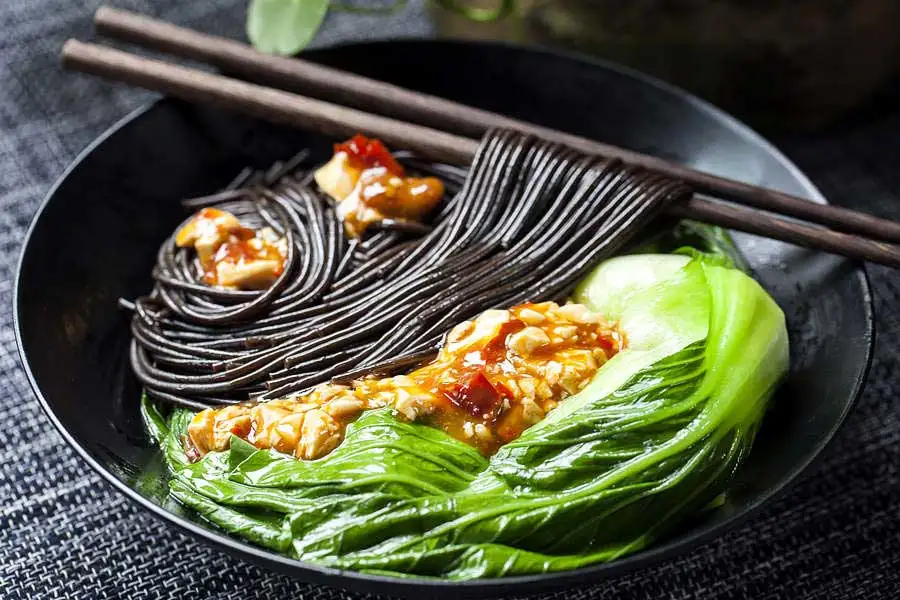
What is Chinese vegetarianism?
In simple terms, Chinese vegetarianism refers to veganism, lacto-ovo vegetarianism, and convenient vegetarianism. Veganism originated from Buddhist precepts and involves not consuming meat, fish, eggs, dairy products, and the five pungent herbs (saffron, garlic, leek, chives, and asafoetida). Lacto-ovo vegetarians involves consuming eggs and dairy products but not animal meat. Convenient vegetarianism refers to eating vegetarian food during certain occasions or periods, such as observing a vegetarian diet on the first and fifteenth of the lunar calendar.
The Chinese vegetarian culture goes far beyond "not eating meat". Over the past two thousand years, it has been the result of religious precepts, traditional health philosophy, and the art of taste. Eating vegetarian food in China has evolved from an initial "precept" to a "healthy lifestyle" today.
In a nutshell, Chinese vegetarian food culture emphasizes compassion (for all living beings), health preservation, harmony with nature (eating seasonal and local ingredients), and frugality (as well as gratitude towards food).
Chinese vegetarian ingredients and cooking techniques
More than 2,000 years ago during the Han Dynasty, the invention of tofu, a plant-based protein food, provided the core ingredients for vegetarian culture. Tofu, along with other bean products such as bean curd sticks, bean cakes, and gluten, made it possible for vegetarian dishes to imitate meat dishes.
And mushrooms (such as shiitake, straw mushroom, and bamboo fungus) and bamboo shoots (such as spring bamboo shoots and winter bamboo shoots) are used to make vegetarian soups, providing a similar "umami" (salty and savory) taste to meat.
In addition, seasonal vegetables, like Red radish, black fungus, soybean sprouts, and green leafy vegetables, are essential. Besides rice and noodles, millet, oats, and ledeki (a type of rice) can also provide carbohydrates, making vegetarian meals more nutritious and flavorful.
When we think of Chinese vegetarian cuisine culture, we also think how vegetarian dishes are sometimes cooked like meat dishes, such as famous vegan/vegetarian dishes: carving winter melon into "red-braised pork", and making "vegetarian chicken" with tofu skin.
>> Recommended13 Days China Discovery for Vegetarians
Diverse regional vegetarian cuisine cultures
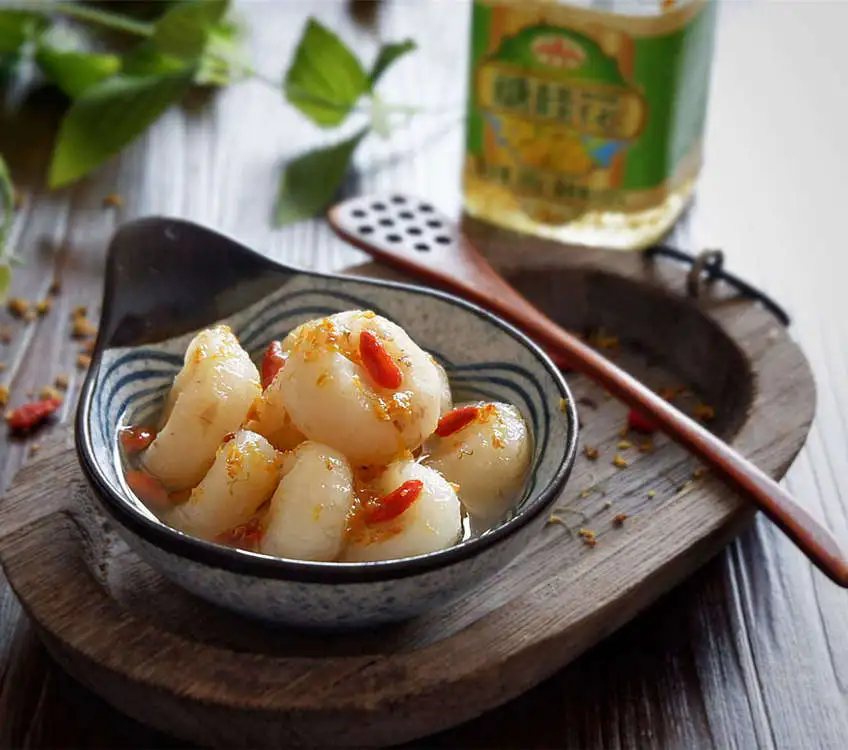
When touring across China, you can sample a wide range of Chinese foods for vegetarians that incorporate the essence of Chinese cuisine. Travel to Beijing and Shandong for imperial-style vegetarian dishes. Tour Shanghai, Suzhou, Hangzhou to witness and eat delicately crafted vegetarian ham and osmanthus sugar lotus roots. In Guangzhou and Xiamen, enjoy nutrient-rich soups made from mushrooms and jelly fungi. Visit Chengdu and Xi'an, and there are chances you can taste spicy vegetarian dishes.
Why became/become a vegetarian in China?
Compared with Western vegetarianism, Chinese vegetarian culture is more adaptable and pragmatic. It blends the ideas of Taoism’s natural maintenance of health, Confucianism’s self-cultivation and Buddhism’s leniency and charity into a unique culinary philosophy, which is more inclusive and open-minded. For the ancient bureaucrats and scholars, those forging a benevolent and virtuous lifestyle by avoiding meaty and greasy meals, can be labeled as vegetarians in realistic or spiritual way.
Another interesting fact in China is that vegetarian culture always flourished during the heydays of the country, when average people never worried about food supply and stability of the society, and religions like Buddhism and Daoism played a more profound impact on the people’s beliefs.
Nowadays, many elderly people and health-conscious individuals choose to follow a vegetarian diet based on traditional Chinese medicine principles. They believe that "vegetarian food nourishes the spleen", which can reduce dampness and heat and prevent diseases before they occur.
>> Recommended 11 Days China Wellness Tour for Seniors
History of Chinese vegetarian culture
Chinese vegetarian cuisine can be traced back to the Western Han Dynasty (202-8 BC). According to historical records, as a dedicated Daoist, Prince of Huai’nan – Liu An invented Tofu, which later turned into an important protein-rich ingredient of vegetarian dishes in China.

Composed in Northern Wei Dynasty (533-544 AD) by Jia Sixie, the book "Qi Min Yao Shu" introduces 11 kinds of vegetarian dishes, which is the earliest vegetarian recipe discovered in China.
During the Liang Dynasty (502-557 AD), Emperor Wu was a devout Buddhist, who spared no effort to advocate Buddhism and vegetarianism in all his life. Since then, vegetarian food has begun to flourish in temples and town streets.
In the Tang Dynasty (618-907 AD), vegetarian restaurants began to appear in major cities such as Chang'an (now Xi'an) and Luoyang. Vegetarian food was increasingly accepted and loved by more ordinary people. At this time, Jianzhen's voyage to Japan also brought the tofu-making technique to Japan. Japan has a long history of consuming vegetarian food, while in 8th century, two Japanese Buddhist sects sent their pupils to Tang Empire to learn how to prepare authentic Zen Buddhist meals.
According to the historical records written in Northern Song Dynasty (960-1127) and Southern Song Dynasty (1127-1279), in the downtowns of the capitals there were some restaurants dedicated to meat-free bites. Another recipe book “Shan Jia Qing Gong” in that period also mentioned more than 100 different types of vegetarian food materials including flowers, herbs, fruits and soy products, as well as the cooking methods of the dishes like "Fried fake fish", "Better-than-meat Pie" and "Steamed vegetarian chicken" for the first time, which adopted 100% vegetarian materials, while looked and tasted like meat.
In the following Yuan, Ming, and Qing Dynasties, the consumption of vegetarian dishes reached a new height. There were plentiful documents and literatures related to veg food. In late Ming Dynasty (1368-1644), the monk Yin Yuan traveled to Japan and preached the Buddhist Dharma. It was recorded that he had introduced the evolved cooking skills of vegetarian food to Japan. At the end of the Qing Dynasty (1636-1912), Xue Baochen's book - "Su Shi Shuo Lve" described more than 200 kinds of famous vegetarian food, some of which are still popular in nowadays.
In the whole 20th century, the living standard of Chinese people was constricted by the economic development. Vegetarian food was only accepted in a small circle of Buddhists. After the reform and opening to the outside world since late 1970’s, China’s economy has been put on the right track. The economic prosperity changed the people’s lifestyle and their perspective. As the Buddhism boomed again in the country, at the same time, more and more people from wealthy and middle class were influenced by the concepts of healthy lifestyle, the population of consuming veg food is fast-growing in the past years.
The vegetarian food proliferated in China in the new millennium. It was estimated that in 2014 the population of vegetarians in China had reached more than 50 million. In all the cities, you can find a few vegetarian restaurants catering to the needs of vegans, especially in the metropolises like Beijing, Shanghai, Shenzhen and Guangzhou, etc. So now you can plan on your vegetarian trip to China without any hassle.
>> Recommended 7 Days Essence of China Tour for Vegetarians