Panmen Gate: The Suzhou’s Ancient Masterpiece
Travel in Suzhou
Hot China City Tours
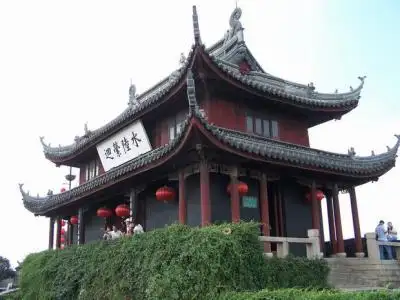
Panmen Gate is also named as Panmen scenic area. The Gate stands at the southwestern corner of the ancient city of Suzhou. As one of the world’s oldest and best-preserved city gates, Panmen was inscribed on the UNESCO World Heritage List as part of the “Grand Canal of China” extension project.
In the scenic area, Three Iconic Wonders in Panmen Scenic Area (盘门三景) are among Suzhou’s most renowned historical landmarks, consisting of three key attractions: its well-preserved gate, city walls, and moat vividly showcase the essence of ancient Chinese defensive architecture. Beyond the amazing gates, the Ruiguang Pagoda from the Song Dynasty and the Qing Dynasty’s Wumen Bridge complement each other, collectively forming a picture of Suzhou’s exquisite view.
Suzhou Panmen Gate Facts
Suzhou Panmen Gate History
The history of Panmen Gate Suzhou is intertwined with the birth of the Suzhou city itself. In 514 BC, King Helü of the Wu State commissioned his minister, Wu Zixu, to build a great capital. This city, known as Helü City, was protected by eight grand gates. Panmen Gate, strategically positioned at the southwestern corner, was the most formidable. Its name, “Pan” (meaning “coiled” in Chinese), is said to derive from the winding waterways or the dragon carvings that once adorned it, symbolizing the city’s impregnable defense.
The gate you see today primarily dates from a 1351 reconstruction during the Yuan Dynasty, with subsequent renovations in the Ming and Qing eras. For centuries, it served as a critical defensive bulwark and a bustling transportation hub on the Grand Canal, controlling both land and water traffic. Its enduring presence makes it a living textbook of Suzhou ancient fortifications and a must-see on your tour.
What to See & Do in Panmen Scenic Area
A visit to Suzhou Panmen Scenic Area is a journey through layered history and serene beauty during your Suzhou tour.As one of the world’s oldest and best-preserved city gates, its well-preserved gate, city walls, and moat vividly showcase the essence of ancient Chinese defensive architecture. Beyond the majestic Panmen Gate, the elegant Ruiguang Pagoda from the Song Dynasty and the Qing Dynasty’s Wumen Bridge complement each other, collectively painting a picture of Suzhou’s exquisite craftsmanship.
>> Recommended 2 Days Suzhou Culture Tour
As dusk settles, this illuminated architectural ensemble transforms into a dreamlike wonderland—the wonderful performances, pagoda’s lights shimmer, bathing the ancient structures in golden radiance.The Panmen Gate Complex
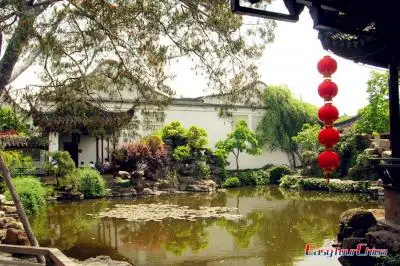
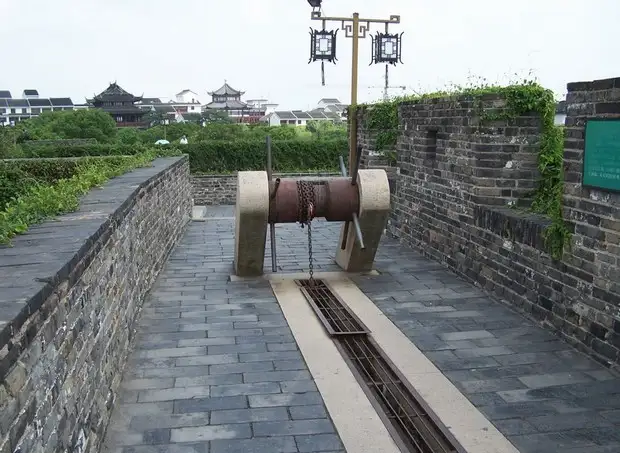
The heart of the scenic area is the magnificent Panmen Gate. Marvel at the engineering of the dual Panmen Land and Water Gate, they offer you a peaceful, elevated path with lovely views of the ancient moat Suzhou on one side and the classical gardens within the scenic area on the other, truly connecting you to the history of the Suzhou ancient city wall.
>> Learn more China’s 10 Best-preserved Ancient City Walls
The Land Gate of Panmen Gates features dual inner and outer layers, separated by a slightly rectangular barbican. The inner barbican measures approximately 177 meters in circumference, with walls standing 8.1 meters tall. Its foundation consists of dressed stone blocks, topped with brick masonry. The inner gate is offset toward the southwest corner of the barbican, constructed with three brick arches.
And its Water Gate stands where ancient boats once passed. The two parallel water gates, built from massive granite blocks, could accommodate two vessels side-by-side and featured huge wooden sluice gates to control the ancient moat Suzhou’s flow.
Ruiguang Pagoda (瑞光寺)
This elegant, 53-meter-tall pagoda is a treasure of Northern Song Dynasty architecture (1004-1030 AD). The seven tiers of Ruiguang Pagoda symbolize a famous Chinese Buddhist saying, “Saving a life is more meritorious than building a seven-story pagoda”. (救人一命,胜造七级浮屠)
>> Recommended 15 Days Buddhist Pilgrimage Tour to China
Ruiguang pagoda’s structure ingeniously combines brick and wood, reducing its overall weight while enhancing structural strength, allowing it to soar majestically with a resplendent appearance. For just CNY 6 yuan, you can climb its stairs for a panoramic view of the entire Panmen Scenic Area and the Suzhou old city skyline. At its base, don’t miss the chance to participate in the traditional bell-ringing ritual.Wumen Bridge (吴门桥)
In Panmen Scenic Area, the connector of the historic landscapes is the Wumen Bridge. As the tallest ancient stone arch bridge in Suzhou, it soars over the Grand Canal. First built in 1084 and rebuilt in 1872, this 66-meter-long bridge boasts the highest arch.
Fifty whole granite steps line each slope north and south, allowing visitors to ascend for panoramic views. At the northern end, the flanking wings of the parapet walls feature 0.6-meter-wide towpaths—relics of the ancient practice where boatmen pulled vessels across the bridge. It offers the perfect vantage point for postcard-perfect photos of the pagoda and gate reflected in the water—a quintessential Suzhou scene.
Evening Visits & Cultural Performances
As dusk falls, you can enjoy the nighttime performances at Panmen Scenic Area. The structures are beautifully illuminated, and the area comes alive with free cultural performances (17:00 to 21:40). The scenic area offers live performances of Suzhou traditional opera for your enjoyment. You will enjoy traditional drum shows at the gate, elegant dances on the water stage, and ethereal music, making for a magical Suzhou travel experience.
The performances are free; and performance schedules may change due to weather, seasons, or other factors. Due to time and venue constraints, prioritize your preferred shows. Here is the schedule of the popular cultural shows.
| Shows & Activities | Time | Venue |
|---|---|---|
| Rowing through Blossoms (摇橹芳菲) | 18:50/20:10/21:40 | Water Stage |
| Ancient Graceful Dance (惊鸿古舞) | 19:15/20:40/21:10 | Ruiguang Pagoda |
| Drums in the Spring and Autumn Period (鼓舞春秋) | 18:00/19:25/20:50 | Water and Land City Gate |
| Blossoms Whirling Dance (繁华飞天) | 18:20/19:40/21:16 | Water Stage |
| Kunqu Opera (昆曲表演) | 18:35/19:55/21:30 | Water Curtain Cavity |
How to Get to Panmen Gate
Panmen Gate is conveniently located in Suzhou’s Gusu District.
By Metro
The easiest way is to take Suzhou Metro Line 4 or 5 to Nanmen Station. From there, it’s about a pleasant 10-minute walk to the scenic area’s east gate.
By Bus
In addition to taking the subway, you can also take buses such as Route 47, Tourist Line 2, Tourist Line 5, or Route 9005 for 2 yuan to reach the Panmen Scenic Area station.
>> learn more about Suzhou travel tips
Explore Panmen Gate with Easy Tour China
While Panmen Gate can be explored independently, the best way to appreciate its history and seamless travel is with a curated tour. To seamlessly experience Panmen Gate and other scenic spots in Suzhou (such as Luzhi Ancient town and The Humble Administrator's Garden), just let Easy Tour China craft your perfect itineraries. Here are some specialized Suzhou itineraries: