Qiankou Residence Museum
Travel in Huangshan
Hot China City Tours
Qiankou Residence Museum, located in the Huizhou District, Qiankou Residence, also named Zixia Mountain Villa, 23 kilometers west of Tunxi and 18 kilometers east of Shexian County, is a remarkable open-air museum and a national key cultural protection unit that offers a concentrated journey into the soul of Huizhou architecture.
Today, Qiankou Residence Museum stands not as a static exhibit but as a living monograph of Huizhou’s folk art, where visitors can walk among history and even participate in the living traditions of the region. In your Huangshan tour, not only visit She County attractions nearby, but set aside a day for this museum to immerse yourself in Chinese architectural culture.
Qiankou Residence Museum Facts
What to See & Do at Qiankou Residence Museum
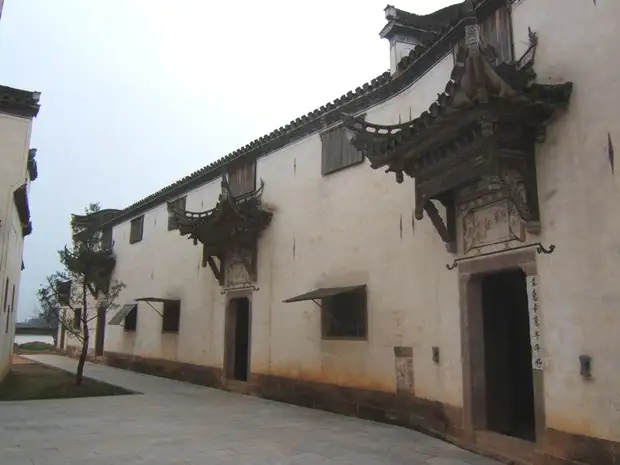
Qiankou Residence Museum is known as the “Museum of Dwelling Houses of Ming in Qiankou”. Here, it is thoughtfully divided into two main sections: the Ming Garden (明园) and the Qing Garden (清园), allowing you to observe the evolution of Huizhou’s architectural styles across centuries.
The main architectures of Qiankou Residence Museum are Sijian Mansion, Caomenting, Leshan Hall, Shanhua Hall, Mansion of Su Xuehen, Mansion of Fang Guantian and Mansion of Wu Jianhua and so on. Besides, you can purchase refrigerator magnets featuring the same architecture at the museum’s gift shop.
The Ming Garden
The Ming Garden, established first in 1990, is widely considered the heart of the museum. It is laid out on a wooded hillside, and a visit feels like discovering a hidden ancient village. It vividly recreates the lifestyle of Ming Dynasty Huizhou people through its mountain villa design.
This garden created a quintessential Huizhou village waterfront entrance, showcasing the unique cultural landscape of ancient Huizhou settlements.
The key highlights in Ming Garden include:Yinxiu Bridge (荫秀桥)
Yinxiu Bridge is a graceful stone bridge that serves as a picturesque entrance to the Ming-era complex.
>> Recommended 17 Days China Ancient Architecture Tour
Silijian Di (司谏第)
This building is an early brick-and-timber structure hall dating from the mid-Ming Dynasty, representing one of the earliest surviving examples of Ming-era Huizhou-style architecture. Constructed by five grandsons of Wang Shan—a jinshi graduate of the early Yongle era and a censor in the Ministry of Personnel—as a family shrine for ancestral worship, the hall still houses an imperial plaque issued by the Yongle Emperor in the fourth year of his reign (1406).
Inscribed with the words “By special decree, you are honored to return to your homeland to cultivate virtue and achieve success, fulfilling my expectations,” the plaque contains words of commendation for Wang Shan.
Mansion of Su Xuehen(苏雪痕宅)
It is a mid-Ming Dynasty brick-and-timber structure whose construction methods of the building are entirely consistent with the formal architectural drawings of pavilions preserved in the Tianyi Pavilion’s collection of authentic Lu Ban blueprints from the Ming Dynasty.
>> Recommended 5 Days Amazing Huangshan Culture Tour
The Qing Garden
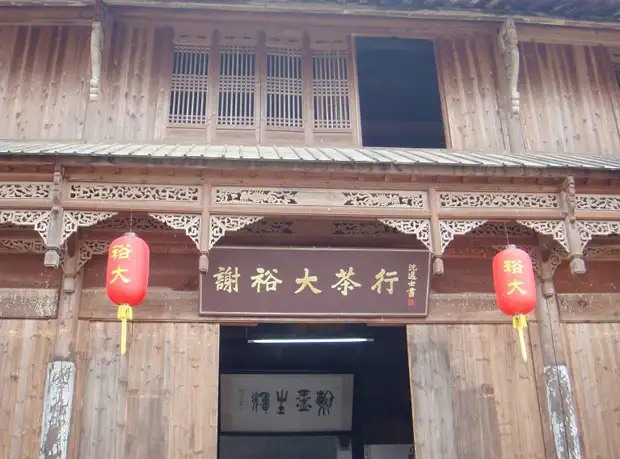
The Qing Garden, opened in 2007, preserved 11 Qing Dynasty Huizhou-style ancient structures. The structures here are generally more ornate, with exquisite wood, brick, and stone carvings.Here, visitors can vividly experience the prosperity of Qing Dynasty Huizhou merchants. While exploring the garden, pause for a cup of tea and fully appreciate the cultural heritage of Huizhou architecture.
The key highlights in Qing Garden include:
Gengli Hall (畊礼堂)
Gengli Hall is the largest and most opulent mansion in the Qing Garden, covering an area of 439.52 square meters. This is a two-story brick-and-wood structure with five bays and three courtyards dating from the late Qing Dynasty. It reflects the wealth and status of a high-ranking official of Qing Dynasty.
>> Related reading: The Most Distinctive Traditional Dwellings in China
Ancient Opera Stage (古戏台)
Ancient Opera Stage in Qiankou is divided into two levels, with the upper level serving as the performance area, directly facing the clan ancestral hall of Qiankou Village. During the Ming and Qing dynasties, people could watch plays from the ancestral hall, achieving the effect of sharing the entertainment with their ancestors.How to Get to Qiankou Residence Museum
The museum is conveniently located in Shexian county, about 27 kilometers north of Tunxi (downtown Huangshan City).
Your tour to the Qiankou Residence Museum can begin in Chengkan Village. Take Huizhou Bus Route 16 (North City Station - Sicun) for 2 stops and alight at Qiangkou Residence Museum.
Or you can take the Huizhou Bus Route 1 or Route 104 from Huangshan North Station for CNY 2 yuan.Explore Qiankou Residence Museum and Huangshan City with Easy Tour China
Easy Tour China’s itineraries which focus on culture and history include the Qiankou Residence Museum, also often combined with nearby Shexian County attractions like the ancient villages Tangmo Village.To deepen your experience, consider exploring it as part of a broader Huangshan tour. Here are a few recommended itineraries of China Huangshan tour.