jiuhua mountain (Jiuhua Shan)
Travel in Huangshan
Hot China City Tours
Located in the heart of Anhui Province, Jiuhua Mountain, also widely known as Jiuhua shan in China, stands as one of the Four Sacred Buddhist Mountains of China.
Jiuhua Mountain was originally named “Jiu Zi Mountain,” was a name derived from a verse “Magic is divided to two branches, sacred mountain generates nine glories” by the Tang Dynasty poet Li Bai.
The mountain boasts profound cultural heritage. Since the Jin and Tang dynasties, numerous renowned figures have left behind poems, songs, essays, and paintings here. The mountain currently preserves over 2,000 cultural relics, more than 500 poems and literary works by renowned scholars and literati throughout history, and over 20 sites of ancient academies and study halls. Jiuhua Mountain offers all tourist a uniquely harmonious blend of cultural pilgrimage and outdoor adventure, making it an unmissable stop on their China Huangshan tour.
Jiuhua Mountain Facts
- In Chinese: 九华山
- Location: Qingyang County, Chizhou City, Anhui Province.
- Opening hours: Full Day
- Tickets: Peak Season (Jan. 16 to Nov. 14): CNY 160 yuan; Off-Season (Nov. 15 to Jan. 15 of the next year): CNY 140 yuan (cableway and sightseeing bus fee excluded)
- Suggested Visiting Duration: 1-3 Days
- Best for: Families with Kids, Any traveler who is interested in Chinese Buddhist Culture, Hiking enthusiasts
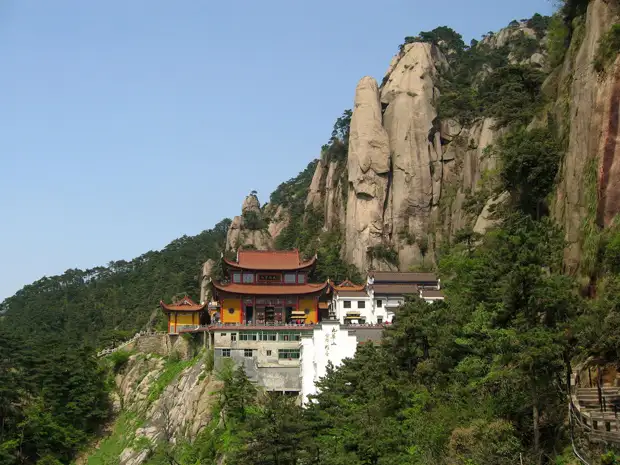
A Brief History of Jiuhua Mountain
As one of the most famous mountains in China, Jiuhua shan’s history as a pilgrimage site can date back over 1,200 years, flourishing in the Tang Dynasty when it became the bodhimanda of Ksitigarbha Bodhisattva (Dizang).The spiritual journey of Jiuhua shan began with the legendary monk Kim Qiaoque, said to be an incarnation of Ksitigarbha Bodhisattva, who once meditated here in deep contemplation.
For centuries, this place has drawn countless monks and scholars, gradually evolving into a significant cultural and religious hub. The mountains harmoniously blend with over 75 ancient temples, showcasing profound Buddhist cultural heritage. Today, as a UNESCO Global Geopark, Jiuhua Mountain guides visitors on a profound journey through China’s rich spiritual history and magnificent natural landscapes.
What to See in Jiuhua Mountain
A journey to Jiuhua Mountain is a journey through living history and awe-inspiring nature. The mountain is divided into several scenic areas, each with its own highlights.If you enjoy visiting ancient Buddhist temples in China, these are the Jiuhua Mountain temples you absolutely must not miss.
Tiantai Temple (天台寺)
Situated on the summit of Tiantai Peak, Tiantai Temple is the highest temple on Jiuhua Mountain. The climb is rewarded with panoramic views and the spiritual ambiance of this lofty sanctuary. “You never reach Jiuhua Mountain without a visit to Tiantai Peak,” as the old saying goes.
Tiantai Temple is reputed to be the most efficacious place for making wishes on Jiuhua Mountain. Here you must climb 257 steps to reach the temple, a number symbolizing the days Ksitigarbha Bodhisattva spent in ascetic practice.
Different approaches up the stairs correspond to different wishes. Ascending from the left side grants wishes for promotion, the right side for wealth, and the center for peace and safety.
Here is a visiting tip: please remember to dress appropriately when entering the temple. Do not step on the temple threshold, and remove your hat as a sign of respect.
Dizang Temple (地藏庙)
Dizang temple, also named as “ Roushen Hall”, this is the sacred hall built over the place where Kim Qiaoque’s body was interred. It is the most revered site for pilgrims paying homage to Dizang.
Outside the Dizang Temple, there lies 81 steps, symbolizing the 81 challenges of Buddhist culture. Remember not to look back while ascending the stairs—this represents casting off your misfortune.
Baisui Palace (百岁宫)
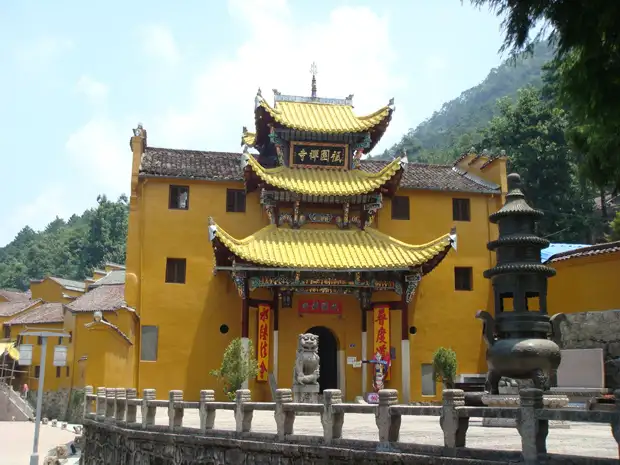
Standing at 871 meters, the Baisui Palace was first in Ming Dynasty, listed as one of the Four Buddhist Temple of Jiuhua Mountain. The palace is enshrined with the fresh-body of Wuxia master who was granted as “Yingshen Bodhisattva” (应身菩萨). For CNY 55 yuan, you can take the cable way to Baisui Palace. Upon disembarking and turn east, you’ll immediately view the natural wonder: a grand view of the mountains in the shape of a Sleeping Buddha sitting on the ground. After a short walk further you’ll reach at to the Hall with 500 Arhats Statues(五百罗汉堂). There are 500 grand Arhat Statues with different expression and gestures enshrined in the hall and they are only kept in Jiuhua Mountain.Huacheng Temple (化城寺)
Huacheng Temple was built in a high-altitude basin. It was rebuilt in Tang Dynasty when Kim Qiaojue came to Mount Jiuhua and died at 99 years old, Huacheng Temple was regarded as the rite for Ksitigarbha Bodhisattva. Walking into the front gate of Huacheng Temple, you’ll see the Depository of Buddhist Sutras, the Great Buddha’s Hall, Old Bronze Bell, etc. Also, you’ll take a view at the important cultural relics, like palm-leaf manuscript, Tripitaka, Sakyamuni Bronze Statue and so on.Flower Terrace Scenic Area (花台景区)
The natural spectacles in Jiuhua Mountain are also stunning. Here are the recommended attractions for those Nature enthusiasts.
This scenic spot is known for its spectacular granite formations, odd-shaped pines, and seas of azaleas in spring and is regarded as the most beautiful place in Jiuhua Mountain. It is a hiker’s and photographer’s paradise with no temples, allowing the natural beauty to take center stage.
Things to Do in Jiuhua Mountain
In Jiuhua Mountain, you can do these things to enrich your tour.Experience Buddhist Activities
No matter you are a Buddhist follower or not, you can also attend Buddhist activities in Jiuhua Mountain. You can seize the right time to travel to Mount Jiuhua, such as the Jiuhua Temple Fair start from the 30th day of the 7th Lunar Month. It starts from the birthday of Bodhisatva Kshitigarbha and lasts 7 days usually. The monks will chant sutras day and night in The Incarnation Grand Hall. Local residents also perform traditional Nuo opera programs such as Mulian Rescues His Mother (目连救母).
Here is the recommended 19 Days Ultimate Buddhist Pilgrimage Tour to China to help you better experience Chinese Buddhist culture
Savor Jiuhua Tea
The misty slopes of the mountain produce excellent tea. On Jiuhua Mountain, Renowned for producing a green tea called Jiuhua Buddha Tea. Originally, it used as an offering to Buddha, it has become a cultural hallmark of Jiuhua Mountain, embodying the concept of “Zen and tea are one.” Visitors to the mountain can savor a cup at the scenic tea pavilion near the Baisui Palace.
>> Recommended 8 Days China Tea Impression Tour
Mount Jiuhua Hiking Trails & Tips
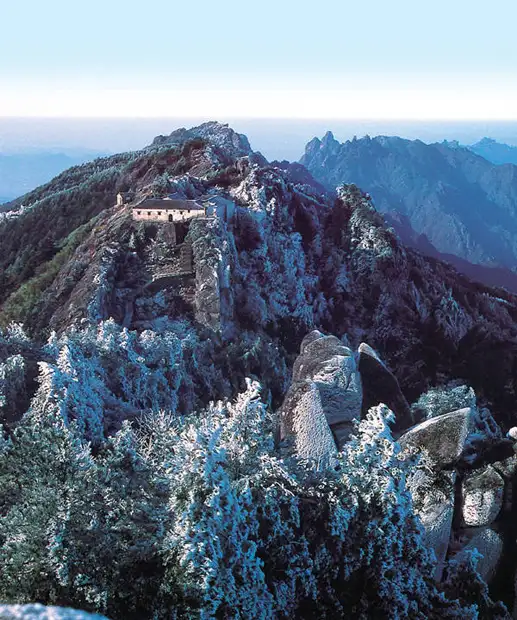
The network of trails connects Jiuhua mountain’s spiritual and natural highlights. There are 2 routes:Classic Pilgrimage Route
Start at Huacheng Temple on Jiuhua Street, proceed to Baohua Palace, then make the ascent to Tiantai Temple on Tiantai Peak. This route passes many smaller temples and offers a full cultural experience.Natural Panorama Loop
Focus on the Flower Terrace Scenic Area. A cable car can take you up to explore the high-elevation plank walks linking spectacular viewpoints like Tiantai Peak.
Here are some essential Tips for every hiking enthusiast. The temperatures fluctuate significantly between morning and evening in the mountains. Be sure to bring a windproof jacket and wear slip-resistant shoes. For safety reasons, do not approach or feed the wild monkeys on the mountain, especially if you are wearing red clothing.
>> Related reading: Hiking in China: 6 Best Hiking Trails with ViewsHow to Get to Jiuhua Shan
Mount Jiuhua is conveniently accessible from several major transport hubs in the Yangtze River region. You can make it a stop on your Yangtze River region travel.The preferred mode of transportation to Jiuhua Mountain is bullet rail. Visitors can take the high-speed train to Chizhou Station.You can use your scenic area tickets to board the complimentary tourist shuttle bus to the attraction, with a journey time of approximately 25 minutes.
Alternatively, travelers may choose to arrive at Jiuhua Mountain Station, though bullet train services to this station are less frequent. Upon arrival, you can also take the scenic area shuttle bus by your scenic area tickets.
You can also choose by air. The nearest airport is Chizhou Jiuhuashan Airport, with limited flights. Hefei Besides, Xinqiao International Airport or Nanjing Lukou International Airport are larger hubs, followed by a 2-3 hour high-speed rails or car ride to the mountain.Discover the Beauty of Anhui with Easy Tour China
To fully immerse yourself in the spiritual grandeur of Jiuhua Mountain, let the Easy Tour China craft your journey. With Easy Tour China, you will enrich your Huangshan tour within other hidden gems in Anhui province, such as explore Huangshan Mountain with just 2 hour’ ride away, or visit Hongcun and Xidi Village and other ancient Huizhou-style village around. Here are some specialized itineraries for your China tour within Huangshan City.
5 Days Huangshan Tour to Jiuhua Mountain 11 Days Splendor of China TourMore Attractions in Huangshan