Bezeklik Thousand Buddha Caves – A Buddhist Art’s Gem in Western China
Travel in Turpan
Private Xinjiang Tours including Turpan
Hot China City Tours
Table of Contents
- 1. Turpan Bezeklik Thousand Buddha Caves Facts
- 2. What is Bezeklik Caves? A History of Bezeklik caves in Xinjiang
- 3. Highlights of Bezeklik Thousand Buddha Caves in Turpan
- 4. How to Visit Bezeklik Thousand Buddha Caves
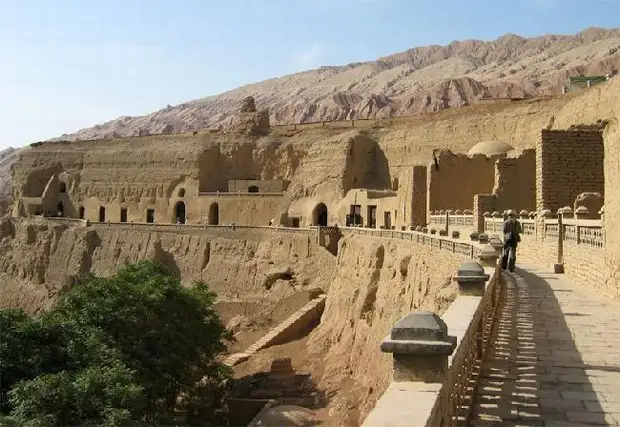
The Bezeklik Thousand Buddha Caves, nestled on the northwestern side of the Flaming Mountain, about 45 km from Turpan. Among the existing grottoes in Turpan, Bezeklik Caves has the most caves and the most abundant murals. It is one of the largest Buddhist grotto sites in Xinjiang and is also the one with the highest standard.
The Bezeklik Thousand Buddha Caves were first excavated in the late period of the Northern and Southern Dynasties and, over a span of seven centuries through the Tang, Five Dynasties, Song, and Yuan periods, have remained the centre of Buddhism in the Gaochang region, , which was once the royal temple of Huihu Kingdom in Gaochang. Today, though many of the murals have been destroyed, the remains can still shed you some light on this precious art.
Turpan Bezeklik Thousand Buddha Caves Facts
What is Bezeklik Caves? A History of Bezeklik caves in Xinjiang
The Bezeklik Thousand Buddha Caves were first excavated during the Gaochang period (5th–7th century) and flourished as a royal Buddhist temple under the Uighur Gaochang Kingdom (9th–13th centuries). The name “Bezeklik” means “hillside” in Uighur and “decorative painting” in Turkic. For over seven centuries, this site was a major Buddhist center along the Silk Road, showcasing a fusion of Persian, Indian, and Chinese artistic styles.
However, foreign expeditions in the early 20th century removed additional artworks. Despite this, the remaining caves continue to draw history lovers and art enthusiasts from around the world.
>> Learn more about Famous Buddhist Grottoes in China
Highlights of Bezeklik Thousand Buddha Caves in Turpan
The Bezeklik Caves in Xinjiang have seven ordinary caves open all year round: caves 16, 17, 20, 27, 31, 33, and 39. There are also 11 special caves, which require an additional tickets to visit, calculated according to the number of caves visited, approximately CNY 100-400 per person.
Cave No. 20
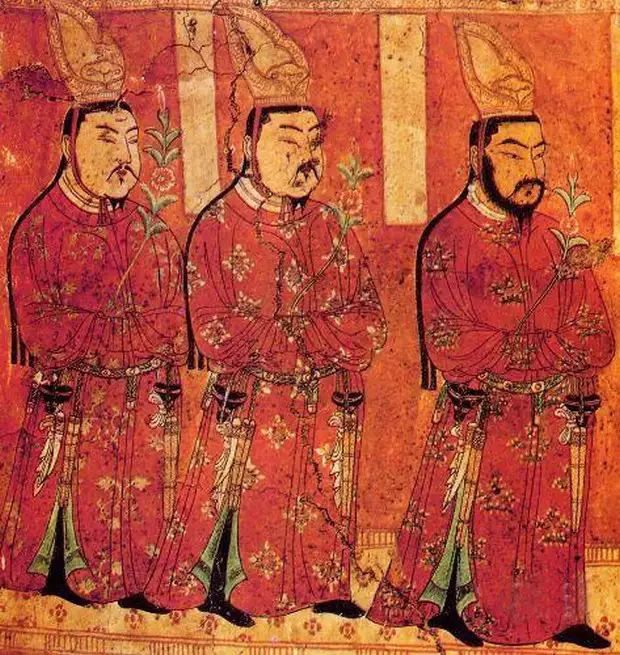
This is the most famous cave, featuring large-scale murals depicting the Uighur Gaochang King and Queen in lavish robes, alongside Buddhist “Pranidhi scenes” (aspiration paintings) that illustrate the king’s vow to attain Buddhahood.
Cave No. 33
Here, on the back wall of Cave No. 33, there is a picture showing the silent mourning of the disciples after the nirvana of the Buddha.
Cave No. 38
This unique cave reflecting the life scenes of ancient Manichaeism, a rare surviving example of this once-widespread religion in China.
Around the 11th century, Buddhists built another wall here and painted Buddhist murals. Later, due to the collapse of the wall, Mani murals were exposed.
Caves No. 18, 29 and 48
These caves were built between A.D. 499 and A.D. 640. Cave No. 18 is a large-scale central pillar cave, which is the earliest existing cave with murals can be seen. The front chamber, corridor and the lower part of the tunnel were repainted in the early period of Gaochang Kingdom. Now only the upper part and the top of the tunnel completely preserve the early murals. On the side wall paint the Thousand Buddha in round-collar cassock with the hands holding in front of the abdomen in different gestures, which will leave you a deep impression during your Turpan tour.
How to Visit Bezeklik Thousand Buddha Caves
How to Get to Bezeklik Caves
The Bezeklik Thousand Buddha Caves are located about 45 km east of Turpan city center. Here are the best ways to reach them:
By car or take a taxi is the most convenient option. A private car or taxi from Turpan takes about 45 minutes to 1 hour. The fare is typically around CNY 70–100. Most of travelers combine this with a visit to the Flaming Mountains and Gaochang Ruins.
Alternatively, you can by public bus. From Turpan’s main bus station, you can take a bus heading to Shanshan or Sanbao Township, and get off at Shengjinkou (CNY 18). From there, hire a local tuk-tuk or three-wheeled motorcycle to the caves (about CNY 6).
Best Time to Visit Bezeklik Thousand Buddha Caves in Turpan
The best time to visit Bezeklik Thousand Buddha Caves in Turpan is during spring (March to May) and autumn (September to November).
During these months, the weather in Turpan is pleasantly mild, with daytime temperatures ranging from 15°C to 28°C.
However, summer (June to August) in Turpan can be extremely hot, as it is known as the “Hottest Place in China,” with temperatures often exceeding 40°C.
>> Learn more about Turpan Weather
Tips for Visiting
>>Learn more about Turpan Travel Tips
Discover Turpan’s Wonders with Easy Tour China
Beyond the Bezeklik Caves, Turpan is the home to other marvels like the Flaming Mountains, the Jiaohe Acient Town, and the ingenious Karez Underground Irrigation System, offering you a comprehensive chance to seamlessly experience history, culture, and breathtaking landscapes. Just let Easy Tour China help you craft the perfect Xinjiang tour. Here are some recommended itineraries.