Power Station of Art (PSA): Shanghai’s Iconic Contemporary Art Museum
Travel in Shanghai
Popular China Tours from Shanghai
Hot China City Tours
Table of Contents
- 1. Quick Shanghai Power Station of Art Facts
- 2. What is the Power Station of Art: From a Power Pant to An Contemporary Art Museum
- 3. Shanghai Biennale
- 4. How to visit PSA Shanghai: Travel Tips
- 5. How to get to Power Station of Art Shanghai?
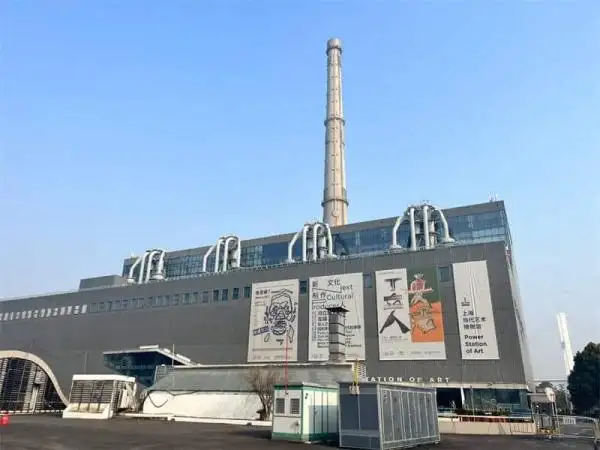
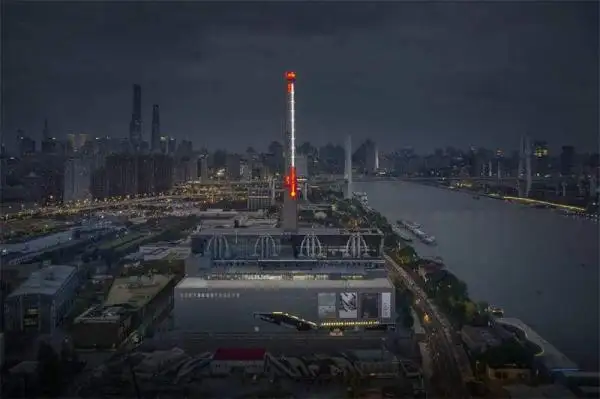
The Shanghai Contemporary Art Museum (PSA) is the first state-owned contemporary art museum in Chinese mainland and also the main venue of the Shanghai Biennale. It is located by the Huangpu River and has a 165-meter-tall chimney, which is not only a city landmark of Shanghai but also an independent exhibition space.
On October 1st, 2012, the Shanghai Nanshi Power Plant, which was built over a hundred years ago, underwent renovation as part of the "City Future Pavilion" at the 2010 Shanghai World Expo. After this renovation, it re-energized as the first state-owned contemporary art museum in the Chinese mainland. In the same year, the Shanghai Contemporary Art Museum became the earliest in China to introduce the collections of the French Pompidou Art Center for exhibitions.
One of the best art museums in Shanghai, PSA, in West Bund art district, has witnessed Shanghai's transformation from an industrial city to an information-based one. Its rough and unconstrained industrial architectural style has provided artists with abundant imagination and creative possibilities. Works by Raphael, Turner, Monet, Munch, Chagall, Picasso, Giacometti, and many other classic masters of Western art history have also been presented here one after another.
Quick Shanghai Power Station of Art Facts
What is the Power Station of Art: From a Power Pant to An Contemporary Art Museum
History
In 1897, the first electric lamp was successfully lit at the Shanghai Nanshi Power Plant. In 1935, Huadian Company began to build a new power plant in Bansongyuan, giving birth to the prototype of the current Shanghai PSA building. In 1985, the main body of the power plant and the chimney were completed.
In 2010, at the Shanghai World Expo, the old power plant was transformed into a three-star green building, and the industrial chimney was also renovated into a huge "thermometer". In 2011, the municipal government decided to convert the Expo City Future Pavilion into a Shanghai’s contemporary art museum, that is, Power Station of Art, Shanghai.
Exhibitions
As early as 2012, when the Shanghai Power Station of Art collaborated with the Centre Pompidou in France to host China's first major exhibition on Surrealism and pioneered a new cooperative model deeply rooted in the local context, subsequent institutions such as the Musée d'Art Moderne de la Ville de Paris, the Museum of Contemporary Art in Lausanne, the Eve Klein Archive, and M+ in Hong Kong have all established connections with the Shanghai Contemporary Art Museum, aiming to activate their own collections and histories through the "Shanghai perspective".
In 2014, when the Shanghai Power Station of Art pioneered the "social installation" perspective, expanding the architecture into an art exhibition series, Canadian Architecture Research Center, MAXXIII Museum in Rome, Vitra Design Museum in Germany, the Architecture Research Center of Columbia University in the US, Southeast University, and Tongji University became allies of the Shanghai Contemporary Art Museum in the field of architecture.
The tortuous exploration of different ethnic groups in Western modernity, the reflection and revolution within Western modernity, the generation of large-scale architecture and cities, as well as the future direction of modern architecture, collectively contributed to the "Awakened Modernity", Shinoichi Nishida, Yona Friedman, Hiduk, Matá Klárová, and Barchirinadu Doshi, among others, who visited the exhibitions in large numbers.In addition, the collaboration with the Cartier Foundation brought about "Strange Scenery", Shigeo Shigematsu, Jean Nouvel, and the "Tree, Tree" exhibition.Therefore, if you are interested in modern art, architecture, and interior design, don't miss PSA on your Shanghai travel. This Huangpu River cultural landmark and Shanghai's industrial heritage, constitutes the fabulous art scene.>> Recommended M50 Art District and Shanghai Museum for international and traditional Chinese art exhibitions
Shanghai Biennale
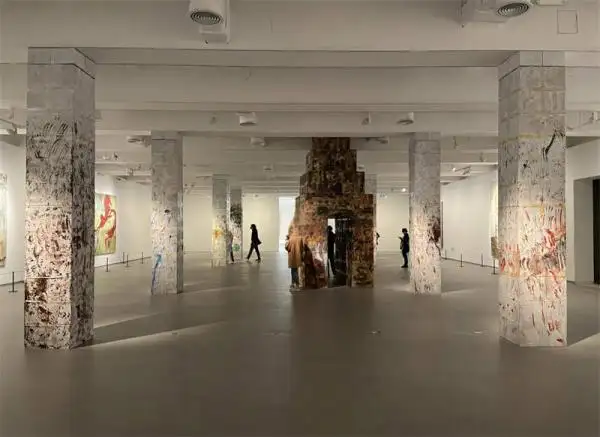
Shanghai Biennale was first held in 1996 and was the first international contemporary art biennale in the Chinese mainland. It is also one of the most influential art events in Asia at present. Since 2012, the Shanghai Power Station of Art has become the organizer and the permanent venue of Shanghai Biennale.Recent exhibition themes
15th Shanghai Biennale 2025-2026
This biennale showcases over 250 works by 67 artists from around the world, including 16 Chinese artists. There are over 30 newly commissioned and newly created works. The exhibition presents an open landscape: visitors can explore and wander freely, rather than following a pre-determined route. Artworks are scattered like seeds throughout PSA - taking root in the halls, interweaving through the flow channels, and hiding in enclosed spaces and exhibition areas.
14th Shanghai Biennale 2023
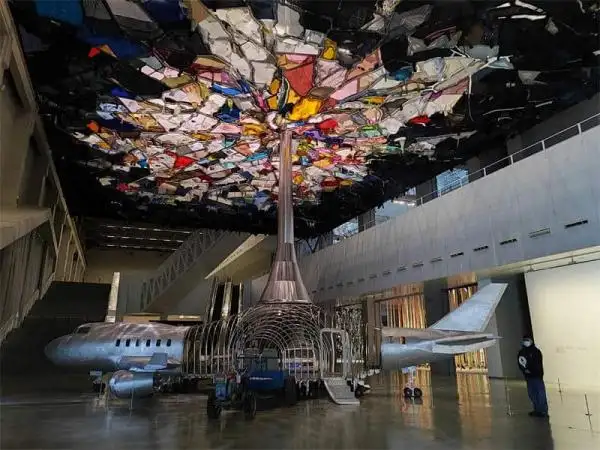
13th Shanghai Biennale 2020
How to visit PSA Shanghai: Travel Tips
- For those traveling in Shanghai with children or seniors, PSA is one of the best things to do in Shanghai, being one of the family-friendly, educational museums in Shanghai, and wheelchairs and strollers are available.
- The main entrance of Shanghai Art Power Station is at No. 678 Miaojiang Road (near Guanyanggang Road), and the side entrance is at No. 200 Guanyanggang Road. You can make arrangements for transportation based on this.
- The PSA Coffee Shop is located on the 1st floor and offers light meals and various beverages. Operating hours: Tuesday - Sunday, 11:00 - 19:00 (except national holidays).
- Please do not bring pets, smoke, or touch the exhibits.
- Bag storage is available in the lobby, and Wi-Fi is available (CMCC-PSA-VISITOR).
- Groups of 20 people or more can enjoy a 20% discount on tickets (limited to on-site purchase only)
- Add PSA to your Shanghai city walk itinerary: Starting from Nanpu Bridge, follow the Huangpu River Promenade to the north, visit PSA, then continue northward to reach the Expo Park, and finally arrive at Dalupu Bridge.
How to get to Power Station of Art Shanghai?
By subway: Take the Shanghai Metro Line 4 or Line 8, then exit at the 2nd exit of "Xizang South Road", and walk about 15 minutes to PSA.
By bus: Take Line 1 of Puxi Binjiang, at the "Miaojiang Road Wangda Road (Shanghai Contemporary Art Museum)" stop; or take Line 45, Line 66, Line 109, Line 144, Line 306, Line 327, Line 780, Line 869, or Line 66 Bridge Sixth Line at the "Zhongshan South South Station Road" stop.
MoCA V.S. PSA Shanghai
MoCA is located in the center of Shanghai, close to the Bund. It offers small-scale exhibitions in the fields of fashion and art design. Meanwhile, PSA is more suitable for those who are deeply interested in contemporary art and wish to view international art exhibitions such as the Shanghai Biennale.
| Name | Shanghai Museum of Contemporary Art (MoCA Shanghai) | PSA (Power Station of Art) |
|---|---|---|
| Location | Inside People's Park on West Nanjing Road (Gate 7). Located in the city center, integrated with natural scenery. | Under Nanpu Bridge on the Huangpu River. Renovated from the old Nanshi Power Plant, with a distinct industrial style. |
| Core Positioning | "The Museum Without Walls", emphasizing cross-border integration of art with fashion, design, and life, focusing on public participation and community connection. | "Art Power Station", positioned as an international, academic contemporary art exhibition and research center, and the main venue for the Shanghai Biennale. |
| Ticket Policy | Permanent exhibitions and MoCA Pavilion projects are usually free. Some special or collaborative exhibitions may charge a fee. | Permanent areas and some special exhibitions (e.g., the Emerging Curators Project) are free. Major international special exhibitions (e.g., the Shanghai Biennale) require tickets (2026 price: 60 RMB). |