Beijing Panjiayuan Antique Market: A Treasure Hunter’s Paradise
Travel in Beijing
Popular China Tours from Beijing
Hot China City Tours
Table of Contents
- 1. Quick Panjiayuan Antique Market Facts
- 2. What is Panjiayuan Antique Market
- 3. What to Buy at Panjiayuan Antique Market, Beijing
- 4. Essential Tips for Barging, Identifying Fakes and More Experiences
- 5. Best Time to Visit Panjiayuan
- 6. How to Get to Panjiayuan Antique Market
Located in Chaoyang District, Beijing, the Panjiayuan Antique Market was established in 1992 is the largest flea market and antique market. The Panjiayuan Market consists of six business areas: street vendor area, ancient building area, classical furniture area, modern collection area, stone carving and stone engraving area, and dining service area. The main products include antique items, handicrafts, collectibles, and decorations.
In ancient China, this was called a "ghost market". People would go to the street vendors at night with lights to search for and exchange items. Generally, it was done by tomb robbers or black market merchants selling "treasures". Here, there used to be legends of getting rich through lucky finds: someone bought a sword for 15 yuan and later sold it for 150,000 yuan; someone bought a plate for 300 yuan and it was later identified as Yuan Dynasty blue and white porcelain, and was sold for several hundred thousand yuan... Of course, many people also argue that many of the antiques in Panjiayuan now are fakes.
In any case, Panjiayuan is one of the best marketplaces in Beijing, and has become a new cultural landmark. "Visiting the Great Wall, tasting Peking roast duck, touring the Forbidden City, and shopping at Panjiayuan" are must-do activities during a trip to Beijing. You might as well come to hunt treasures.
Quick Panjiayuan Antique Market Facts
In Chinese: 潘家园旧货市场
Address: Southwest of Panjiaoyuan Bridge on the South Third Ring Road in Beijing
Area: 48500 m²
Type: Flea market, antique market
Entrance fee: Free
Opening hours:
Summer: April 8 - October 7
Monday to Tuesday: 9:00 - 21:00
Wednesday: 9:00 - 23:00
Thursday: 9:00 - 21:00
Friday: 9:00 - 23:00
Saturday: 6:00 - 21:00
Sunday: 7:00 - 21:00
Winter: October 8 - April 7
Monday to Tuesday: 9:00 - 20:00Wednesday: 9:00 - 23:00
Thursday: 9:00 - 20:00
Friday: 9:00 - 23:00
Saturday: 7:00 - 20:00
Sunday: 7:00 - 20:00
How long to visit it: 1 to 3 hours
Best for: Antique and collection enthusiasts, travelers/bloggers seeking in-depth cultural experiences, tourists wishing to shopping in Beijing for unique souvenirs, and young adventurers with a limited budget looking for free things to do in Beijing
What is Panjiayuan Antique Market
Panjiayuan used to be called Pan Jia Yao (Kiln of Pan). Brick kilns and tile factories could be seen everywhere, and the aroma of fire and smoke filled the kiln factories. Later, the low-lying land was filled in, and one after another, residential buildings rose up. Sporadic street stalls quietly emerged. Residents brought their old furniture and old electrical appliances, hoping to get some change. People from other places sensed the business opportunity and came with old and new porcelain, old books and other miscellaneous items.
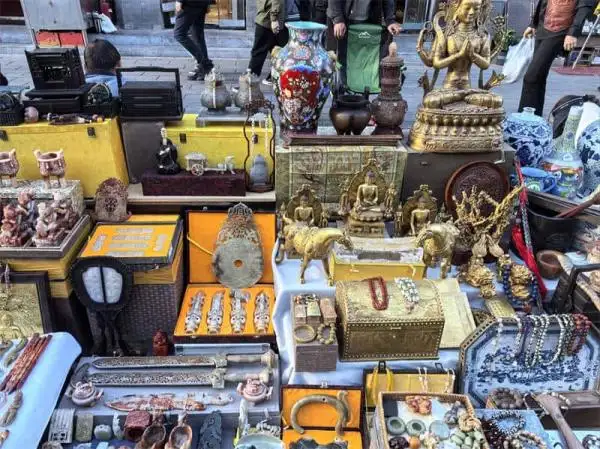
The collections and second-hand goods here mainly include antique furniture, writing tools, ancient books and paintings, old books and periodicals, agate and jade, ceramics, foreign currencies and coins, bamboo, wood and bone carvings, shadow puppet masks, Buddhist relics, ethnic costumes and accessories, relics from the Chairman Mao Period, etc.
In addition, Panjiayuan Market is the largest collection center for traditional handicrafts in China. It features products from places such as Hengshui for snuff bottles, Yangliuqing for New Year paintings, Jiangsu for embroidery, Dongyang for wood carvings, Quyang for stone carvings and sculptures, Shandong for shadow puppets, Jiangxi for porcelain and crystal ornaments, Yixing for purple clay, Shaanxi for bronze artifacts, Yunnan for clothing, Tibet for Buddhist items, Xinjiang for white jade, and Taiwan for Jiechi pottery.
In Panjiayuan Antique Market, there are still many masters of intangible cultural heritage who are passing on their ancient skills here. For instance, the old man who does paper-cutting has his apprentice set up a stall. While demonstrating the paper-cutting techniques, he patiently explains the methods. The artist who makes snuff bottles demonstrates the inner-painting technique on the spot. The fine strokes as thin as hair are moving on the inner wall of the bottle, outlining exquisite patterns.
What to Buy at Panjiayuan Antique Market, Beijing
How to visit Panjiayuan? The best way is to search for treasures by category based on your preferences. And you will find that visiting the stalls is like opening a lottery box, very exciting and interesting.Ground Stalls Area
This is the soul of Panjiayuan, specializing in antique items, handicrafts, and collectibles. It opens every weekend, retaining the tradition of "ghost markets" that opened at dawn in history. On the Panjiayuan weekend market, the number of visitors can reach 60,000 to 70,000.
Plastic sheets laid on the ground display old cameras, old books, picture albums, old maps, old records, copper ornaments, shadow puppet props, porcelain, old coins, as if telling stories from the past. Here, items are not classified as expensive or cheap; it all depends on whether they suit your taste.
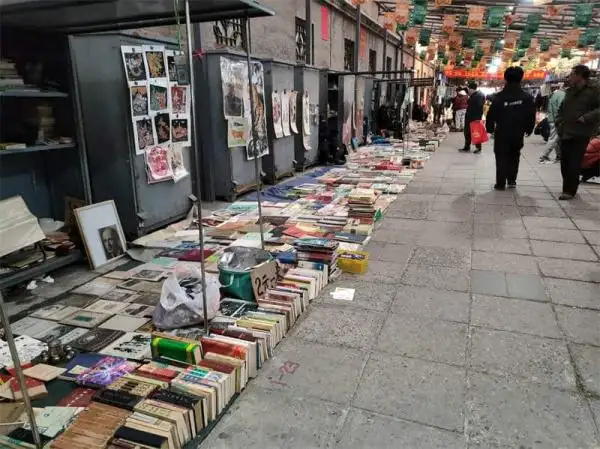
On Saturdays, the street vendor area holds the night market of Panjiayuan themed on intangible cultural heritage, with regular performances such as shadow puppet shows.
East Gate String Beads Area
Have you smelled the fragrance of wood? Sandalwood, rosewood, banyan wood, crystal, different string beads have different textures and lusters. The stall owners are mostly experienced experts, and by twirling the beads with their fingertips, they can tell you the origin and history of the beads. Even if you don't buy them, they are willing to chat with people and sometimes even teach beginners to distinguish between genuine and fake ones.
>> Related reading: 8 Cool Things to Buy in China
Classical Furniture Area
Carved tables and chairs of the Ming and Qing styles, wooden boxes with copper rings, screens with exquisite patterns, stone carvings from Quyang, wood carvings from Dongyang, all contain the wisdom of the old craftsmen. Experienced people will bend down to carefully examine the joints of the furniture - whether they are the wear and tear left on old objects.Specialty Crafts Area
Hengshui's snuff bottles, Yangliuqing's New Year paintings, Yixing's purple clay pots, white jade from Xinjiang, characteristic costumes from Yunnan, and bronze wares from Shaanxi can all be found here.
>> Recommended Beijing tours with Panjiayuan: 3-day Beijing Shopping Tour
Ghost Market of Panjiayuan
The most distinctive feature of Panjiayuan Antique Market is its ghost market. "Ghost market" refers to a temporary market that specializes in antiques at around three or four o'clock in the morning. The story of the "ghost market" can be traced back to the late Qing Dynasty and the early Republic of China.
At that time, the country's fortune declined, and many prominent officials and dignitaries saw their family fortunes decline. They stole the family antiques and sold them on the street. After all, this was a disgraceful thing, and they could only conduct transactions with lanterns at three or four o'clock in the morning. This way, the buyers couldn't see the faces. Because it looked like a ghost, it got its name. Therefore, antique dealers all know that the ghost market has good goods.
Nowadays, Panjiayuan holds a ghost market for two days each week, on Saturdays and Sundays. At 4 o'clock in the morning, the vendors load the paper boxes filled with small handicrafts onto tricycles and gather their customers outside the anjiayuan Antique Market. After the market opens, although there are many people, it is not noisy. Everyone is whispering. The regular customers always carry a flashlight with them. The intention is to see the goods more clearly. This has been a tradition passed down from previous lives. Now it is just a sign indicating that the buyers are knowledgeable.
>> Recommended 3-week Cheap China Tour for Young Adventurers: Panjiayuan Market, off-the-beatan-path adventures, affordable price
Essential Tips for Barging, Identifying Fakes and More Experiences
Are the cultural and artistic items at Panjiayuan Market fake?
The vast majority of merchants operate with integrity and provide genuine cultural and artistic artifacts. However, there are still some unscrupulous merchants who take advantage of consumers' lack of expertise, passing off inferior goods as genuine or deliberately inflating the value of the items.
If you want to purchase genuine cultural and artistic items at Panjiayuan, enhance your knowledge of cultural and artistic items, understand market prices, avoid blindly pursuing low prices, and don't be deceived by the merchants' persuasive words.
>> Explore 26 Best Markets in China
How to Negotiate Price?
In the Panjiayuan antique market, you can bargain, but you need to do it with moderation. It's best to check the prices online or consult someone who is knowledgeable before starting the bargaining.
Also, you can't ask the price of something someone is holding in their hands. Wait until they put it down, then you can ask the price. Don't get angry and lose your temper just because you've found a good deal. Accept it gracefully.
After buying the item you like, you can choose to pay in cash or use electronic payment. Large stores usually also support credit card payment.
>> Keep reading: Top 10 Shopping Streets in China
Cultural activities in Panjiayuan Market
Panjiayuan Market regularly holds the Panjiayuan Spring Festival Cultural Fair, covering a various of cultural performances/shows, folk performances, Hanfu parades, food markets, etc. It also hosts large-scale exhibitions such as the Panjiayuan Antique Book Expo, the Folk Collection Art Expo, and the Panjiayuan Jewelry and Gemstone Culture Festival, as well as special events such as the Jingdezhen Ceramic Culture Week.>> Recommended 13 Days Crazy Shopping & Foodie Tour to China for Women
Best Time to Visit Panjiayuan
Just like experienced collectors and treasure hunt enthusiasts, on Saturday morning, when the most vendors set up their stalls and the range of goods is the widest, you can experience the "ghost market". On Sunday morning, it is also the time for the "ghost market", but the scale is slightly smaller.
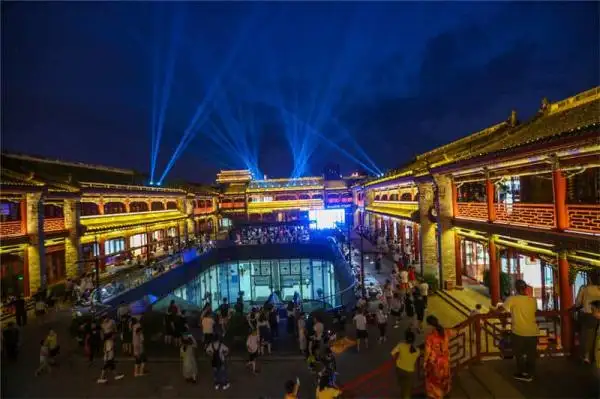
On Wednesday or Friday evenings, the business hours are extended to 23:00 (in summer), which is the best time to experience the Panjiayuan night market.
If you don't want too many people and prefer to browse & shop quietly, go during the day on Monday, Tuesday, and Thursday.